
Why Gums Bleed During Brushing and What It May Indicate
Why Gums Bleed During Brushing and What It May Indicate
Why Gums Bleed During Brushing: Last Updated: September 8, 2026{Reading Time: 8 min
Seeing pink in the sink after brushing can feel unsettling, especially when it happens unexpectedly. In many cases, gum bleeding while brushing reflects irritation, inflammation, or changes along the gumline.
A small amount of bleeding may appear after changing flossing habits, using a harder toothbrush, or allowing plaque to build up. Recurring bleeding deserves attention because healthy gums generally remain firm and do not bleed during gentle daily cleaning.
Gum tissue can react quickly to plaque and mechanical irritation. Inflammation may develop around areas that brushing often misses, including behind molars, crowded teeth, and older dental work.
This article explores common bleeding gums causes, what gum bleeding while brushing may indicate, and how supportive oral care habits may help reduce irritation over time.
What Healthy Gums Usually Look Like
Bleeding is often easier to notice than the subtle signs of healthy gum tissue. Understanding these signs provides a useful point of comparison when evaluating changes in your oral health.
Healthy gums generally fit snugly around the teeth, maintain a consistent color, and remain comfortable during routine brushing or flossing. Natural gum color varies among individuals, but healthy tissue typically appears firm and free from persistent swelling.
If you’re unsure how your gums compare, our guide on what healthy gums usually look like explains common signs of healthy gums, color variations, and characteristics associated with healthy gum tissue.
What Does It Mean When Gums Bleed When Brushing?
When gums bleed during brushing, the tissue often responds to inflammation or physical irritation. The bleeding itself is a symptom that may point to changes beneath the gumline.
Many people assume that brushing too hard causes bleeding. That can happen, but inflamed gums may also bleed with gentle brushing.
Healthy gums are generally firm and resilient. Inflamed gums may appear:
- swollen
- darker red
- shiny
- tender near the gumline
- more sensitive during brushing or flossing
Bleeding may occur occasionally or almost every day, depending on the condition of the gum tissue.
For a focused explanation of this symptom, read our guide to bleeding gums while brushing and learn which common gum changes may deserve closer attention.
According to the American Dental Association, bleeding gums can be associated with gingivitis, an early stage of gum disease linked to plaque accumulation around teeth.
Dental Pro 7 Oral Care Support
If recurring gum irritation has you looking for a simple daily oral-care routine, Dental Pro 7 provides an oral probiotic approach designed to support a balanced oral environment.
Explore Dental Pro 7
Use it as part of a consistent routine alongside brushing, flossing, and appropriate professional dental care.
Common Bleeding Gums Causes – Plaque Buildup Near the Gumline
One of the most common bleeding gums causes is plaque accumulation.
Plaque is a sticky bacterial film that constantly forms on teeth. When it remains near the gums, surrounding tissue may become irritated and inflamed. This condition is often called gingivitis.
Plaque buildup is not always obvious. Teeth can appear clean while bacteria remain concentrated in difficult areas such as behind lower front teeth, around wisdom teeth, near crowded teeth, and close to gum pockets.
If plaque hardens into tartar, the gums may become even more reactive.
Readers interested in reducing bacterial buildup naturally may also find this guide helpful: natural plaque control strategies.
Brushing Too Aggressively
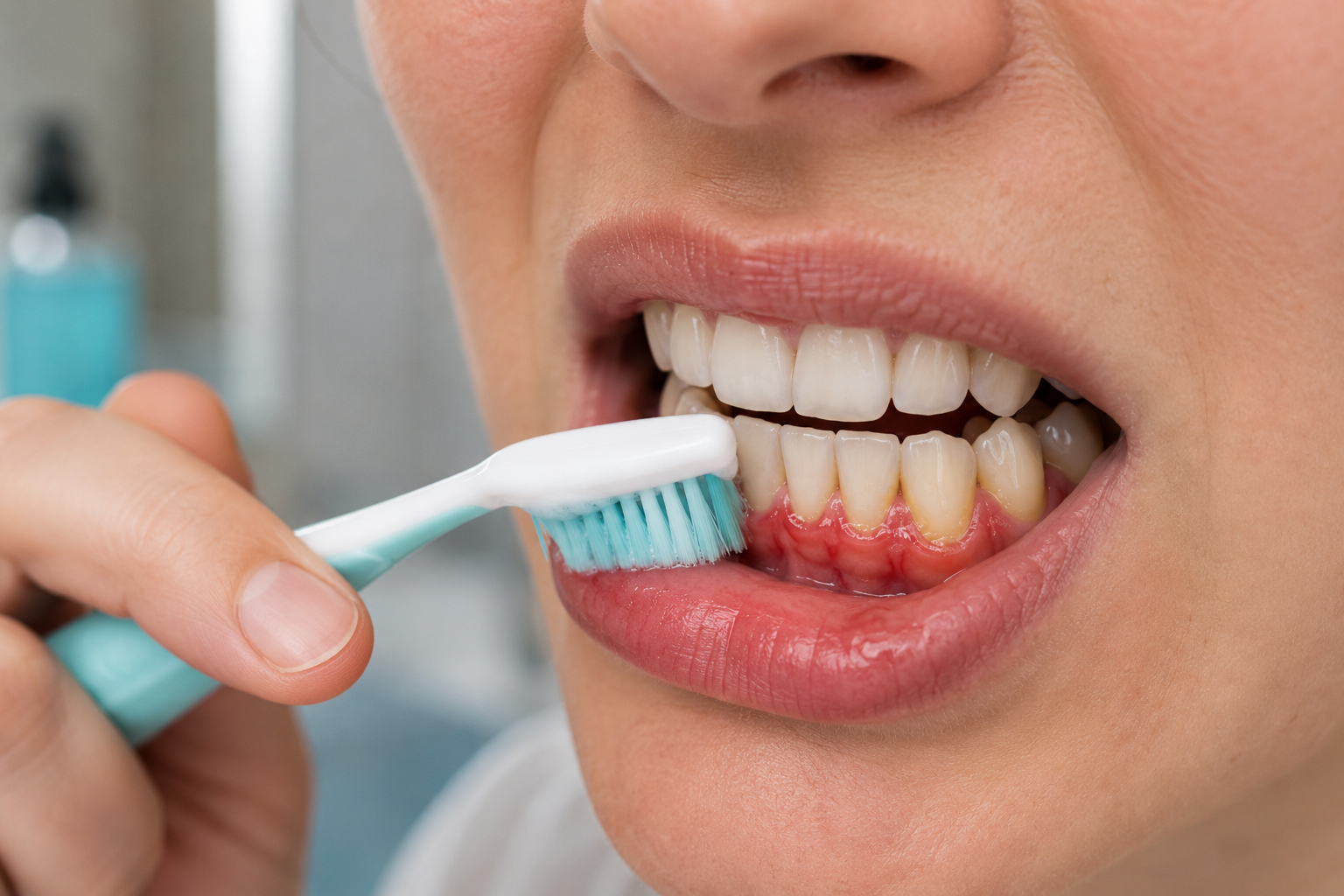
Another possible cause is mechanical irritation from brushing habits.
Aggressive brushing often comes from good intentions. People who try to scrub away stains or plaque may place excessive pressure on delicate gum tissue.
Common signs include:
- gum soreness after brushing
- gum recession near certain teeth
- frayed toothbrush bristles
- sensitivity around exposed roots
Soft-bristle toothbrushes are generally gentler on gum tissue than firm bristles.
Starting to Floss Again
A common situation occurs when someone resumes flossing after a long break.
Gums may bleed for several days because inflamed tissue is being disturbed after a period of inconsistent cleaning. This does not mean flossing itself is harmful. Consistent, gentle cleaning may help the gums become less reactive over time.
The key is persistence without excessive pressure.
Gum Inflammation and Early Gingivitis
Persistent gum bleeding while brushing may indicate early gum inflammation.
Gingivitis can develop quietly. Some people experience little pain, which makes the condition easy to overlook until bleeding becomes frequent.
Additional signs may include:
- persistent bad breath
- puffiness between teeth
- mild tenderness
- gums pulling slightly away from teeth
This related guide discusses supportive approaches for irritated gums: gum inflammation natural remedies.
For broader support strategies, see natural gingivitis care at home.
Dry Mouth and Mouth Breathing
Dry oral tissues can become more sensitive and vulnerable to irritation.
People who sleep with their mouth open sometimes notice gum tenderness or bleeding near the front teeth after waking. Reduced saliva flow may also allow bacteria to accumulate more easily overnight.
Dry mouth may be linked to:
- dehydration
- certain medications
- mouth breathing
- smoking
- stress
- sleep issues
Additional reading: dry mouth and gum health support.
Smoking and Tobacco Exposure
Tobacco affects blood flow and gum tissue health in complex ways.
Some smokers experience less visible bleeding initially because nicotine constricts blood vessels. Inflammation can still progress beneath the surface.
When smoking habits change or stop, bleeding may temporarily become more noticeable as circulation improves.
The Centers for Disease Control and Prevention notes that tobacco use increases the risk of gum disease and oral health complications.
Hormonal Changes
Hormonal fluctuations may temporarily increase gum sensitivity.
This can occur during:
- pregnancy
- puberty
- menstruation
- menopause
Hormonal shifts can make gums react more strongly to plaque that might otherwise cause mild irritation.
Nutritional Factors
Dietary deficiencies may sometimes influence gum bleeding.
Vitamin C deficiency has historically been associated with gum bleeding because collagen and connective tissues require adequate nutrition for maintenance.
A balanced diet supporting oral tissues often includes:
- leafy greens
- fruits
- protein sources
- hydration
- mineral-rich foods
Could Dry Mouth Play a Role?
Plaque accumulation and gum inflammation are common reasons gums bleed during brushing. Oral dryness can also affect gum comfort and sensitivity.
Saliva helps maintain moisture, support the oral environment, and protect soft tissues from irritation. Reduced saliva production may leave the mouth feeling dry or sticky, especially after sleep.
For a closer look at this relationship, read our article on Dry Mouth at Night and Its Connection to Gum Health.
Understanding the Importance of Microbial Balance
Bleeding gums are often associated with inflammation triggered by plaque accumulation along the gumline. Oral health also depends on the balance of microorganisms living within plaque.
A balanced oral microbiome may support healthier gum conditions when combined with brushing, flossing, and professional dental care.
For readers interested in oral microbiome products, our guide to Dental Pro 7 ingredients and formula explains the probiotic strains, vitamins, minerals, and other supporting compounds used in the formula.
When Gum Bleeding While Brushing Should Not Be Ignored
Occasional mild bleeding may improve after better brushing and flossing consistency. Persistent symptoms deserve professional evaluation.
You should consider seeing a dental professional if you notice:
- bleeding lasting more than 1–2 weeks
- loose teeth
- gum recession
- swelling or pus
- pain while chewing
- chronic bad breath
- bleeding without brushing
Sometimes gum bleeding may relate to deeper periodontal problems rather than surface irritation alone.
For practical information about available approaches, see this bleeding gums treatment guide covering common causes, supportive care, and situations that may require professional dental attention.
The National Institute of Dental and Craniofacial Research explains that untreated gum inflammation can progress into more advanced periodontal disease affecting bone and supporting structures.
One useful way to evaluate gum health is to compare irritated gums with the characteristics of healthy tissue. Healthy gums generally fit snugly around teeth, maintain a firm appearance, and remain free from persistent bleeding.
Learn more about what healthy gums usually look like and the common signs of healthy gum tissue.
How to Support Healthier Gums at Home
One practical observation from long-term oral care habits is that softer brushing can reduce unnecessary irritation.
A soft-bristle toothbrush combined with slow circular motions may help remove plaque while limiting pressure on sensitive gum tissue.
For readers seeking location-specific information about supportive home care, explore this natural remedy for bleeding gums guide for additional ideas and considerations.
Improve Cleaning Consistency
Skipping oral hygiene for several days and then brushing aggressively can create a cycle of inflammation and bleeding.
Steady daily care tends to provide more consistent support than occasional intensive cleaning.
Helpful resources include:
- natural oral care routine guide
- how to strengthen gums naturally
- how to heal gums faster naturally at home
Consider Oral Bacteria Balance
Oral health involves more than simply removing bacteria. Researchers increasingly discuss the importance of bacterial balance within the mouth.
Certain oral probiotics are being explored for their potential role in supporting oral microbiome balance and fresher breath.
More information here: oral probiotics and oral health support.

Oil Pulling and Gentle Rinsing Practices
Some people include oil pulling or non-alcohol oral rinses as part of supportive home care routines.
These approaches complement rather than replace brushing or professional dental care. Some users find gentler routines more comfortable when their gums feel sensitive.
Related reading: oil pulling gum health benefits explained.
Oral Care Products Sometimes Used for Sensitive Gums
Certain people prefer milder oral care products when experiencing gum irritation, especially products without strong alcohol-based ingredients.
Some readers explore botanical oral care support options through CallNature oral care support.
Others compare soft-bristle toothbrushes, alcohol-free mouthwashes, tongue scrapers, or oral probiotic products available through Amazon oral care products.
The most helpful approach is usually consistency and gentleness rather than frequently switching products.
Bleeding Gums and Bad Breath Often Appear Together
Gum irritation and persistent bad breath often overlap.
Inflamed gum pockets can create environments where odor-producing bacteria thrive more easily.
This guide explores supportive approaches for oral odor management: natural bad breath oral care support.
A More Realistic View of Gum Health
Gum health rarely changes overnight.
Bleeding gums often develop gradually through small daily patterns:
- inconsistent brushing
- plaque accumulation
- stress
- dry mouth
- smoking
- neglected flossing
- irritation from aggressive cleaning
Improvement can also take time.
People sometimes expect gum bleeding to disappear immediately after changing toothpaste or buying a new mouthwash. Irritated gum tissue may need consistent care and reduced inflammation before noticeable improvement occurs.
That slower process is often closer to real-world oral health than quick-fix marketing claims.
FAQ – Why Gums Bleed During Brushing
Is it normal if gums bleed when brushing?
Occasional mild bleeding can happen, especially after inconsistent flossing or irritation. Persistent bleeding may indicate gum inflammation or plaque buildup.
Can brushing too hard cause gum bleeding?
Yes. Aggressive brushing can irritate delicate gum tissue and contribute to gum recession or soreness.
Does gingivitis always hurt?
Not always. Early gingivitis may produce little pain while still causing redness and bleeding.
Can stress affect gum health?
Stress may indirectly affect gum health through dry mouth, teeth grinding, inflammation, and disrupted oral care habits.
Should bleeding gums stop after flossing regularly?
In many cases, gums become less reactive after consistent gentle flossing and brushing habits improve.
For additional information, see our bleeding gums treatment guide for a broader overview of supportive care and professional evaluation.
About the Author
Dental Pro 7 Ingredients Editorial Team
The Dental Pro 7 Ingredients Editorial Team focuses on educational oral health content centered around gum wellness, oral hygiene habits, microbiome balance, and realistic preventive care approaches. Articles are researched using publicly available dental resources, clinical references, and oral care observations intended to improve reader understanding of everyday gum health concerns.
Disclaimer – Why Gums Bleed During Brushing
This article is for informational and educational purposes only and does not provide medical advice, diagnosis, or treatment. Persistent gum bleeding, pain, swelling, or oral discomfort should be evaluated by a licensed dental professional or healthcare provider. External references and product mentions are included for reader convenience and should not be considered guarantees of effectiveness.