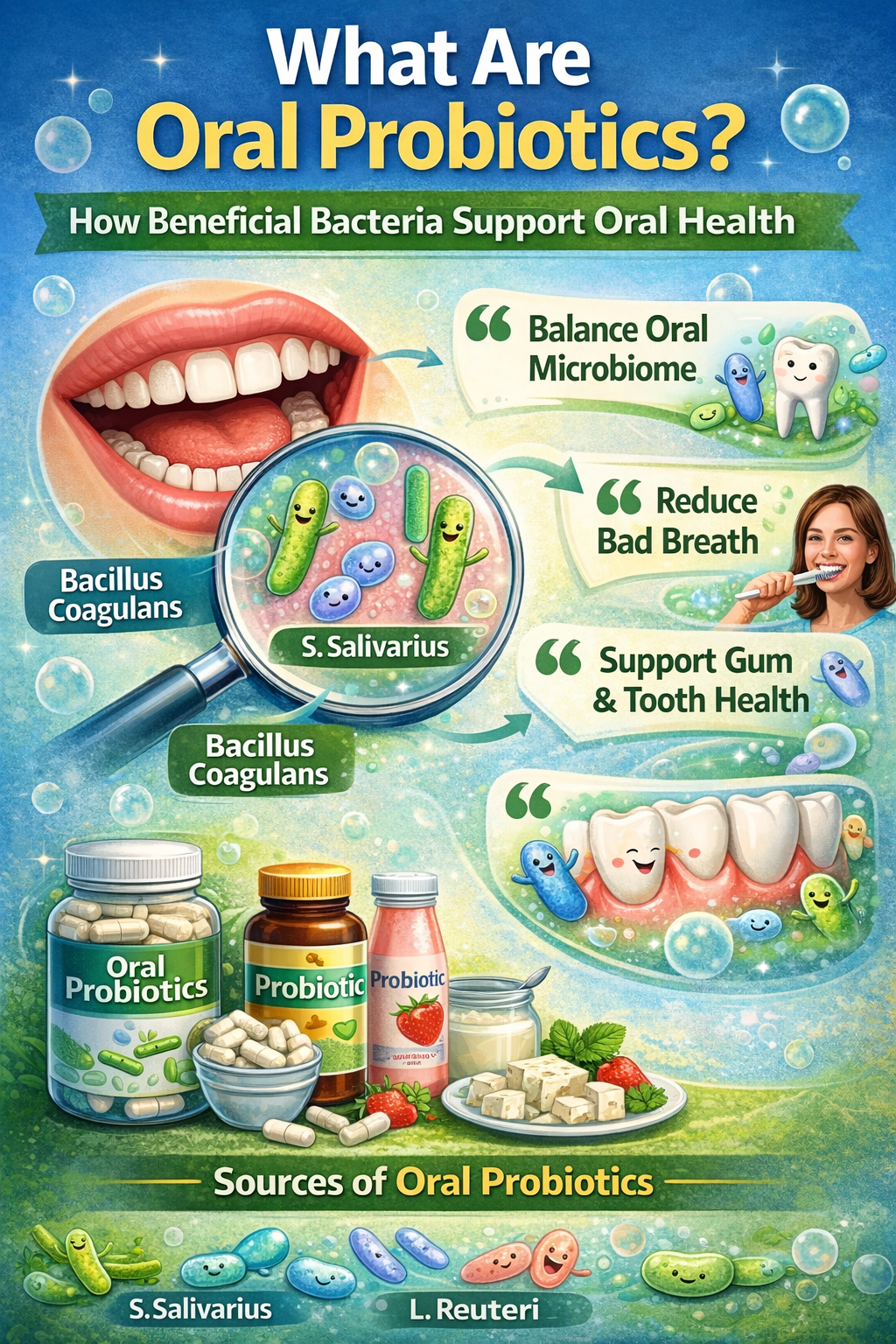
What Are Oral Probiotics? How Beneficial Bacteria Support Oral Health
What Are Oral Probiotics? How Beneficial Bacteria Support Oral Health
What Are Oral Probiotics?Last Updated: September 17, 2026| ⏱️ Min Read: 15 min read
Oral health discussions often focus on removing bacteria. Toothpaste, mouthwash, and dental cleaning routines commonly emphasize controlling harmful microbes and keeping the mouth clean. Yet the mouth naturally contains hundreds of bacterial species, and many contribute to a balanced oral environment.
A healthy oral environment depends on microbial balance.
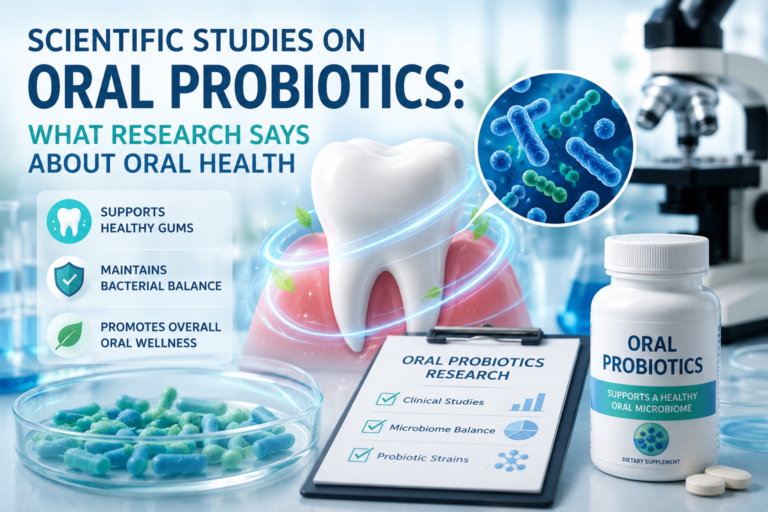
Oral probiotics are products designed to support that balance by introducing beneficial bacteria into the mouth. Researchers continue studying how specific strains may influence breath freshness, gum comfort, plaque activity, and the overall oral microbiome.
This topic has gained attention because the oral microbiome works more like an ecosystem than a battlefield. When certain bacteria become dominant, plaque, odor, or gum irritation may become more noticeable. Oral probiotics aim to support healthier bacterial communities while complementing established oral hygiene habits.
Understanding the Oral Microbiome and Bacterial Balance
The human mouth is home to one of the body’s most active microbial environments. Bacteria live on the tongue, gums, cheeks, saliva, and tooth surfaces. Eating habits, smoking, dry mouth, medications, stress, hydration, and oral hygiene routines can all influence this environment.
Researchers increasingly describe the mouth as an important part of the body’s broader microbiome system. Understanding this relationship provides useful context for people exploring probiotic-based oral care.
To better understand how bacterial balance influences daily oral wellness, explore our Oral Microbiome and Dental Health educational guide.
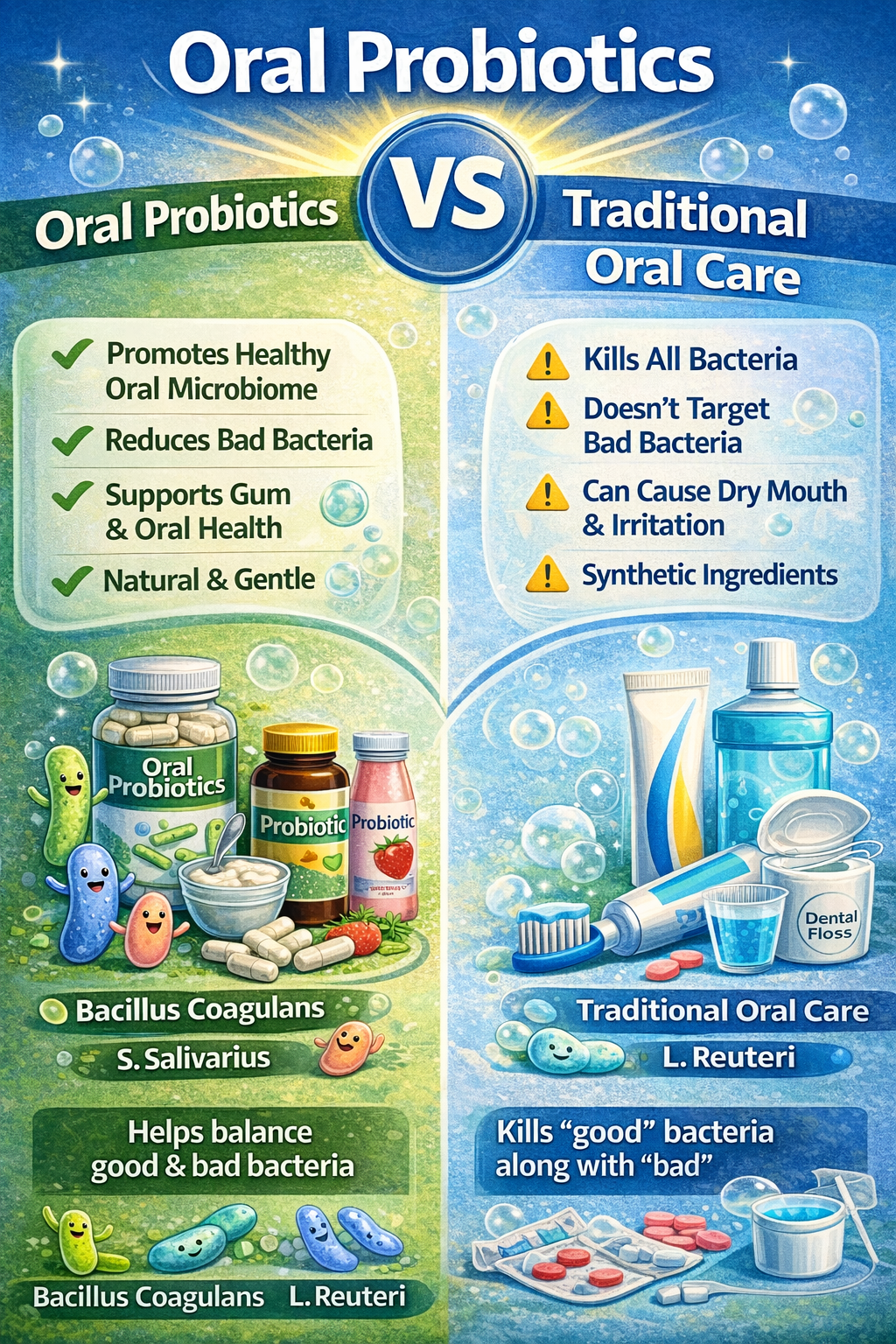
Unlike traditional oral care products that mainly focus on removing or controlling bacteria, oral probiotics are intended to introduce strains considered beneficial for oral balance. These products may come as lozenges, chewable tablets, powders, gums, or dissolvable tablets designed to remain in the mouth.
For readers exploring oral care products, these resources may help:
Dental Pro 7 Oral Health Products
Readers interested in the biological side of this topic can explore How Oral Probiotics Work and Scientific Studies on Oral Probiotics.
For a broader explanation of how oral microbial communities are studied, read Oral Microbiome Research Explained.
What Makes Oral Probiotics Different From Digestive Probiotics?
Digestive probiotics are generally formulated to interact with the gastrointestinal environment. Oral probiotics serve a different purpose because they are designed for the oral cavity.
That distinction matters because the mouth has its own temperature, moisture, acidity, saliva flow, and food exposure patterns. A bacterial strain that performs well in the digestive tract may behave differently in the oral environment.
This is why oral probiotic products often contain strains researched specifically for oral environments.
Commonly Studied Oral Probiotic Strains
Streptococcus salivarius
Streptococcus salivarius has been studied for breath-related concerns because it naturally occurs on the tongue and in the upper throat.
Lactobacillus reuteri
Research on Lactobacillus reuteri has explored its potential role in supporting gum comfort and maintaining a balanced oral bacterial environment.
Lactobacillus paracasei
Studies involving Lactobacillus paracasei have examined its relationship with plaque activity and oral microbial communities.
Weissella cibaria
Researchers have also investigated Weissella cibaria, particularly its potential connection with oral odor compounds and microbial activity.
Each probiotic product can contain different strains and concentrations. Research findings can also vary according to the strain, formulation, dosage, duration, and consistency of use.
For readers interested in a broader product-based approach to oral wellness, explore Dental Pro 7 Oral Health Support: A Probiotic Approach to Oral Wellness.
A Simple Way to Understand Oral Probiotics
Think of the oral microbiome as a community. Different microorganisms occupy different areas of the mouth and interact with each other.
Oral probiotics focus on supporting selected beneficial microorganisms within that community. This approach differs from strategies that focus primarily on broad bacterial reduction.
The goal is microbial balance that works alongside brushing, flossing, tongue cleaning, hydration, and professional dental care.
Explore Dental Pro 7 for Daily Oral Wellness
Interested in a natural approach to supporting everyday oral care? Dental Pro 7 combines botanical ingredients in a liquid oral-care formula designed to complement regular brushing and other healthy oral hygiene habits.
Explore Dental Pro 7 Oral Health Support and learn more about how its ingredient approach fits into a complete oral wellness routine.
Why Interest in Oral Probiotics Has Increased
Public interest in oral probiotics has expanded alongside growing research into microbiomes. People are becoming more aware that oral health connects with daily habits, saliva flow, sleep quality, diet, hydration, and bacterial balance.
This growing interest also reflects a broader shift toward supporting the oral environment rather than focusing only on bacterial removal.
For example, alcohol-heavy mouthwashes may create a strong clean sensation while contributing to oral dryness for some users. Aggressive brushing can also place unnecessary stress on gum tissue.
Oral probiotics are therefore often discussed as part of a supportive routine that includes brushing, flossing, tongue cleaning, healthy nutrition, and professional dental care.
Choosing Oral Probiotic Products Carefully
Labels, strain transparency, delivery method, and storage instructions all matter when comparing oral probiotic products.
A product marketed mainly for digestive support may use strains different from those studied in oral health research. Consumers often compare products based on:
- strain identification,
- dissolvable delivery methods,
- sugar-free formulations,
- storage stability,
- dosage information,
- and ingredient transparency.
For readers exploring oral care products, these resources may help:
Dental Pro 7 Oral Health Products
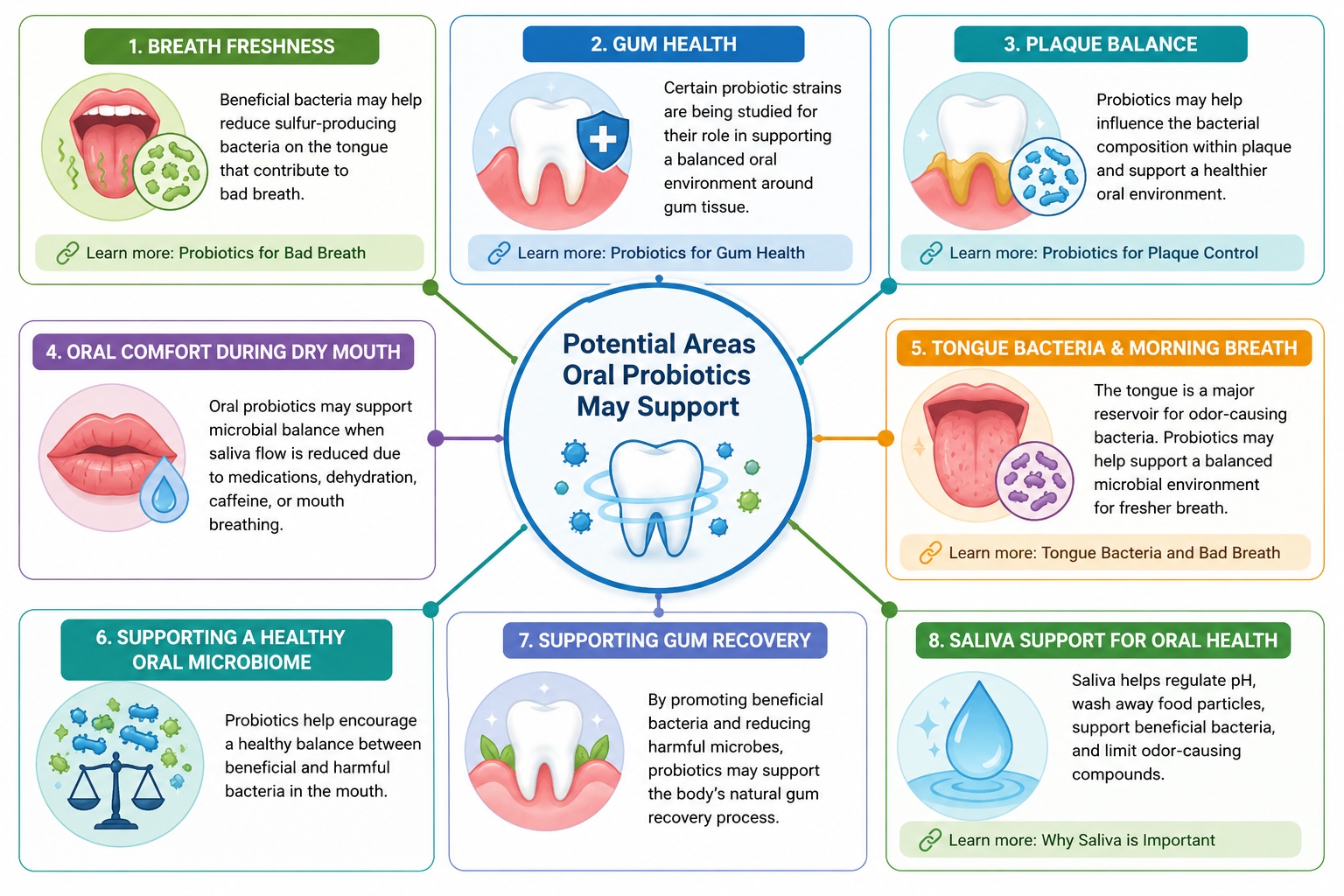
Potential Areas Oral Probiotics May Support
Research into oral probiotics continues to develop. Several areas appear frequently in scientific discussions about beneficial oral bacteria.
Breath Freshness
Bad breath is often associated with volatile sulfur compounds produced by certain oral bacteria. Researchers have studied whether selected probiotic strains may influence the microbial communities associated with oral odor.
A separate guide discussing this topic in more detail is available here: Probiotics for Bad Breath
A healthy oral microbiome supports a balanced relationship between different bacterial communities. When this balance changes, plaque accumulation and gum irritation may become more noticeable.
Early signs such as redness, tenderness, or bleeding during brushing can encourage people to review their oral care routine.
To learn more about this common issue, read why gums bleed during brushing and what it may indicate.
Supporting beneficial oral bacteria through consistent oral hygiene and healthy lifestyle habits can contribute to a healthier oral environment.
People who want practical strategies for managing undesirable oral bacteria can explore how to reduce harmful oral bacteria naturally.
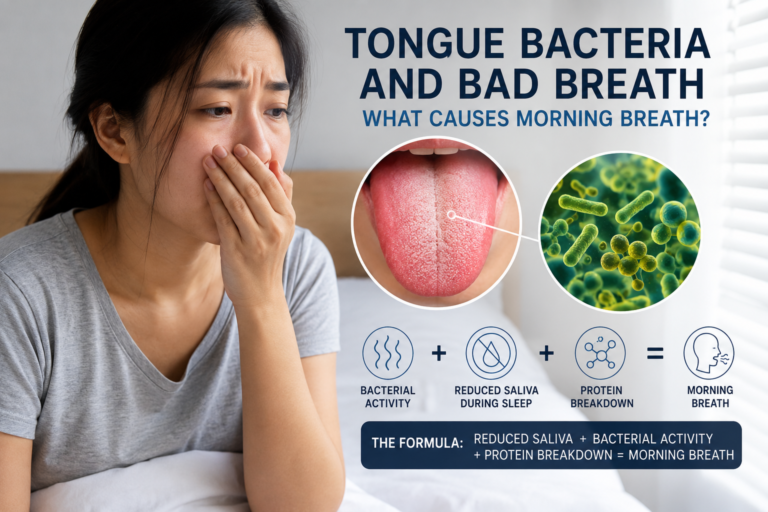
Exploring the Connection Between Tongue Bacteria and Morning Breath
Researchers have identified the tongue as an important reservoir for bacteria associated with oral odor. Its textured surface provides many areas where microorganisms can accumulate.
This connection explains why oral probiotic discussions often extend beyond teeth and gums to the broader microbial ecosystem.
Understanding the role of tongue bacteria and bad breath provides additional context for how oral bacterial balance may influence everyday breath quality.
How Oral Probiotics May Support Healthy Gums
Gum health is influenced by several factors, including plaque accumulation, smoking, oral hygiene habits, diet, and bacterial balance.
Certain probiotic strains are being studied for their possible role in supporting a healthier microbial environment around gum tissue.
People experiencing persistent gum irritation or bleeding should consider professional dental evaluation.
Read our Bleeding Gums Treatment Guide for practical prevention and treatment recommendations.
For a broader understanding of periodontal conditions, read our Gum Disease Causes, Symptoms, Treatment and Prevention Guide covering prevention and available treatments.
Readers interested in ingredient combinations designed for gum support can also explore Dental Pro 7 Formula Gum Health Support and its oral wellness approach.
Many people also combine probiotics with botanical ingredients. Discover the Best Essential Oils for Gum Health Support guide for complementary oral care strategies.
Understanding the Bacterial Composition of Plaque
Plaque is more than a layer that develops on teeth after eating. It is a complex biofilm containing many bacterial species that interact throughout the day.
The effect of plaque on oral health can depend on its microbial composition. Changes within plaque communities may contribute to gum irritation and other oral health concerns.
Researchers continue exploring how oral probiotics may influence microbial balance within these communities.
Readers who want to understand the relationship between plaque biofilms, bacterial activity, and gum wellness can learn more about plaque bacteria control for better gum health.
Additional reading: Probiotics for Gum Health
Plaque Balance
Plaque naturally develops on teeth throughout the day. Its microbial composition plays an important role in oral health.
Researchers continue examining how selected probiotic strains may influence plaque-related microbial activity.
Related article: Probiotics for Plaque Control
Oral Comfort During Dry Mouth
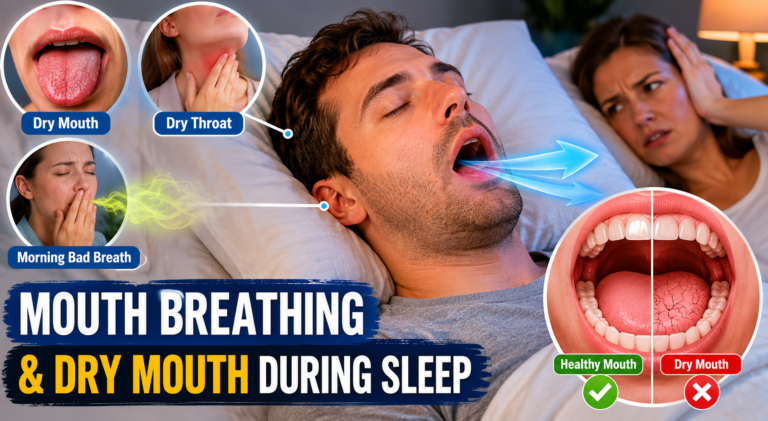
Dry mouth can change the oral environment because saliva helps regulate microbial activity. People experiencing dryness related to medications, dehydration, caffeine, or mouth breathing may explore hydration and saliva-support strategies as part of their routine.
Why Saliva Matters in a Healthy Oral Environment
Saliva does much more than keep the mouth comfortable. It helps regulate oral pH, supports microbial balance, washes away food particles, and helps manage bacterial byproducts.
Reduced saliva flow can allow acids and bacterial byproducts to remain in the mouth longer. This change may influence breath quality, tooth comfort, and the overall oral environment.
For a closer look at saliva and oral microbial balance, explore why saliva plays an important role in oral health.
For additional practical strategies, read How to Improve Oral Microbiome Naturally.
Realistic Expectations About Oral Probiotics
Online discussions sometimes present probiotics as a quick solution for oral health concerns. Current research supports a more measured perspective.
Results can vary considerably.
Factors such as smoking, sugar intake, tongue cleaning, sleep quality, dental restorations, braces, hydration, and existing oral conditions can influence outcomes.
Consistency also matters. Oral probiotics work as part of a broader routine rather than as a standalone replacement for established oral hygiene practices.
Readers looking for a balanced overview can also review:
What Current Research Says
Research into oral probiotics remains active. Clinical studies have explored relationships with plaque levels, gum health markers, oral odor compounds, and microbial balance.
Study results can vary because researchers use different probiotic strains, doses, formulations, and study designs. Short-term findings also provide limited information about long-term effects.
Readers who want to understand the scientific background can explore Scientific Studies on Oral Probiotics.
For a broader explanation of the research field, read Oral Microbiome Research Explained.
Reliable organizations and research databases discussing oral microbiome science include:
How to Compare Oral Probiotic Products and Their Ingredients
Labels, strain transparency, delivery method, and storage instructions remain important when comparing oral probiotic products.
A product marketed for digestive support may use strains different from those studied in oral health research.
Consumers often compare products based on:
- strain identification,
- delivery format,
- sugar content,
- storage stability,
- ingredient transparency,
- and intended use.
To compare probiotics, vitamins, minerals, and botanical compounds together, read Dental Pro 7 Ingredients Explained before selecting an oral health product.
For readers exploring oral care products, these resources may help:
Before choosing any supplement or oral care product, review the Dental Pro 7 Side Effects Review and Safety Guide for ingredient safety and usage considerations.
Building a Complete Oral Care Routine With Oral Probiotics
Most discussions around probiotics focus on supporting the oral environment alongside established healthy habits.
Daily routines remain central to long-term oral wellness. Brushing twice daily, cleaning between teeth, cleaning the tongue, staying hydrated, and maintaining regular dental visits all contribute to oral care.
Readers comparing product performance and customer experiences can also explore our Dental Pro 7 Review before making an informed decision.
Readers interested in a complete product evaluation can explore our Dental Pro 7 Comprehensive Review covering ingredients, benefits, usage considerations, and scientific evidence.
Those interested in the product’s underlying approach can also read How Does Dental Pro 7 Work to better understand its oral microbiome-focused design.
Simple habits such as cleaning the tongue, staying hydrated, limiting frequent sugar exposure, replacing worn toothbrushes, and addressing chronic dry mouth can support everyday oral comfort.
The strongest long-term oral care routines are usually practical, consistent, and sustainable.
Looking Beyond Oral Probiotics
Oral probiotics are one component of a broader oral wellness strategy. Long-term oral health involves interconnected factors such as gum health, microbiome balance, saliva production, plaque management, tongue hygiene, hydration, nutrition, and preventive dental care.
Readers interested in exploring these broader topics can visit our Oral Health Resource Center, which provides educational resources covering oral bacteria, preventive oral care, gum wellness, fresh breath strategies, and evidence-informed oral health practices.
Why Biofilms Matter When Discussing Oral Probiotics
When people hear the word “plaque,” they often think about something that develops on teeth and requires cleaning. Plaque is also an oral biofilm—a community of microorganisms living together on oral surfaces.
Because probiotics interact with microbial communities, understanding biofilm formation provides useful context for how beneficial bacteria may fit into the broader picture of oral health.
If you would like to better understand the environment where oral probiotics function, read our article on how oral biofilms form and mature in the mouth.
Dental Pro 7 Editorial Team
The Dental Pro 7 Editorial Team reviews oral microbiome research, preventive dental care resources, probiotic science, gum health studies, and oral wellness topics.
The team aims to provide accurate and educational information that helps readers understand oral health topics more clearly.
Dental Pro 7 Editorial Policy
All content published on DentalPro7.us follows editorial standards focused on accuracy, transparency, scientific sourcing, and educational value.
Articles are periodically reviewed and updated when significant new research or product information becomes available.
FAQ – Oral Probiotics
What are oral probiotics?
Oral probiotics are products designed to introduce beneficial bacteria that may help support oral microbiome balance and overall oral wellness.
How do oral probiotics work?
Oral probiotics introduce selected bacterial strains into the oral environment. Researchers study how these strains interact with existing microbial communities and oral surfaces.
Do oral probiotics replace brushing and flossing?
Oral probiotics are intended to complement daily brushing, flossing, tongue cleaning, and routine dental care.
How long does it take to notice changes from oral probiotics?
Results vary according to the product, probiotic strain, consistency of use, oral hygiene habits, diet, and individual oral conditions.
Can oral probiotics support fresh breath?
Some research has explored how specific probiotic strains may influence odor-associated bacteria and compounds linked with bad breath.
Are oral probiotics safe for most adults?
Many commercially available oral probiotics are formulated for general adult use. People with specific medical or dental concerns can discuss probiotic use with a healthcare professional.
Can oral probiotics support gum health?
Research continues to explore how certain probiotic strains may help support a balanced oral environment associated with healthy gums.
Where can I learn more about probiotic-based oral care products?
Readers can explore the Dental Pro 7 Comprehensive Review for an overview of ingredients, benefits, usage considerations, and available scientific evidence.
What ingredients are commonly included in oral probiotic formulas?
Oral probiotic products may contain selected beneficial bacterial strains along with supporting ingredients intended to promote oral microbiome balance and gum wellness.
The exact ingredients vary between products. Reading the complete label can help consumers understand the strains, supporting ingredients, serving information, and storage requirements.