Soft-Bristled Toothbrush vs Hard Bristles for Gum Health
Soft-Bristled Toothbrush vs Hard Bristles for Gum Health
Soft-Bristled Toothbrush vs Hard Bristles for Gum Health: Walking down the oral care aisle can feel surprisingly complicated. Toothbrushes come in different sizes, shapes, handle designs, and bristle textures. Among the most common questions is whether soft bristles or hard bristles are better for gum health.
At first glance, hard bristles may seem like the more effective option. They feel firm and aggressive, creating the impression that they can scrub away plaque more thoroughly. Yet gum health depends on more than cleaning power alone.
The condition of your gums is influenced by how plaque accumulates, how you brush, and how much pressure is applied to delicate tissue along the gumline. In many cases, the toothbrush itself is only part of the story.
Understanding the differences between soft and hard bristles can help you make a more informed choice, especially if you experience gum sensitivity, bleeding, irritation, or discomfort during brushing.
Why Toothbrush Bristle Type Matters
The goal of brushing is not to scrub teeth as hard as possible. The objective is to disrupt plaque biofilm before it matures and contributes to gum inflammation.
As discussed in our guide to oral biofilm and plaque formation, plaque is a living microbial community that adheres to tooth surfaces. Effective brushing removes this buildup while minimizing unnecessary trauma to surrounding tissues.
The challenge is that gums are softer and more vulnerable than enamel. A toothbrush that feels effective on teeth can sometimes be harsh on gum tissue when used repeatedly.
The Gumline Is a Sensitive Area
The junction where teeth meet gums is one of the most important areas to clean. It is also one of the easiest areas to irritate.
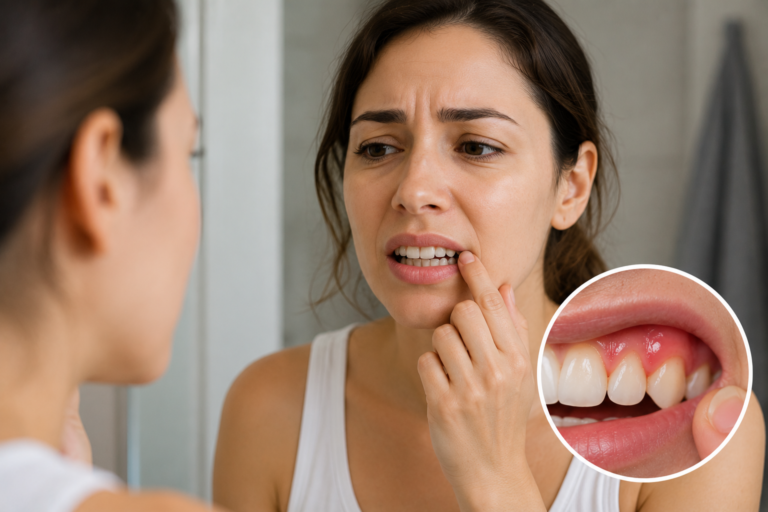
Small amounts of plaque often accumulate along this margin. If plaque remains undisturbed, inflammation may develop, leading to redness, swelling, tenderness, or bleeding.
Our article on gum pockets and inflammation explains how ongoing irritation can affect gum tissue and create deeper spaces where bacteria can thrive.
Understanding Soft-Bristled Toothbrushes
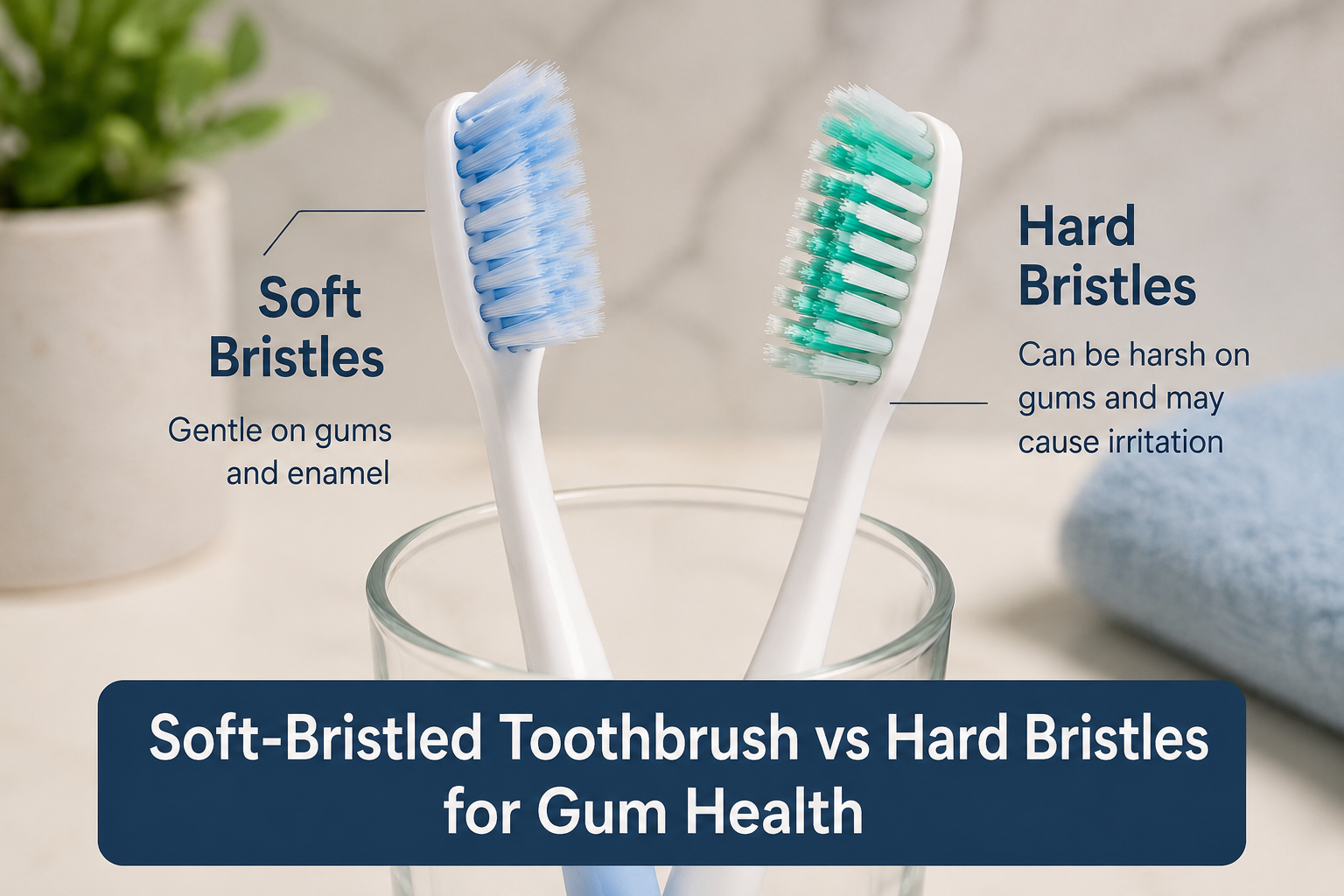
A soft toothbrush for gums is designed to flex as it contacts teeth and gingival tissue.
Rather than scraping aggressively, soft bristles sweep across the tooth surface and reach the gumline with less mechanical stress.
Why Soft Bristles Are Commonly Preferred for Gum Health
One observation frequently seen in daily oral care is that gum discomfort often relates more to brushing force than brushing frequency.
People who switch from a stiff brush to a softer one sometimes report that their gums feel less tender within a few weeks. This does not mean the toothbrush healed anything. Instead, it may have reduced repeated irritation that was occurring twice a day.
Soft bristles can help:
- Clean along the gumline with less abrasion
- Reduce discomfort in sensitive areas
- Lower the likelihood of gum irritation from excessive brushing pressure
- Reach small contours around teeth more easily
A softer brush also provides better feedback. When pressure becomes excessive, the bristles bend rather than driving force directly into the gum tissue.
The goal of brushing is not only to remove plaque but also to support the long-term health of gum tissue. Healthy gums typically fit closely around the teeth, maintain a firm appearance, and do not show persistent swelling or bleeding during routine brushing. Because aggressive brushing and overly stiff bristles may contribute to gum irritation in some individuals, it can be helpful to understand what healthy gums normally look like when evaluating your oral care routine. Learn more in our guide on what healthy gums usually look like, including common signs of healthy gums and healthy gum color variations.
Soft Bristles and Sensitive Gums
A toothbrush for sensitive gums should prioritize gentle plaque removal.
Sensitivity can result from several factors, including inflammation, gum recession, recent dental procedures, or changes in oral hygiene habits.
If your gums bleed during brushing, evaluating your brushing technique and toothbrush selection may be worthwhile. You may also find helpful context in our articles on bleeding gums while brushing and oral health factors associated with bleeding gums.
Understanding Hard-Bristled Toothbrushes
Hard-bristled toothbrushes are designed with stiffer filaments that resist bending during brushing.
The immediate sensation can feel satisfying because the brush creates more friction against tooth surfaces.
However, that sensation does not necessarily indicate better plaque removal.
Does Harder Mean Cleaner?
Research suggests that brushing technique and consistency generally matter more than bristle stiffness alone.
Plaque is relatively soft. It does not require aggressive scraping to remove.
In fact, vigorous brushing may sometimes leave people with sore gums while still missing plaque between teeth or near difficult-to-reach surfaces.
An interesting real-world observation is that individuals who brush hardest often believe they are cleaning most effectively. Yet they may still develop plaque accumulation in areas where technique, rather than force, is the limiting factor.
Potential Concerns With Hard Bristles
Repeated exposure to excessive mechanical force can contribute to:
- Gum irritation
- Increased sensitivity
- Wear along the gumline
- Discomfort during brushing
These effects depend on multiple variables, including brushing pressure, frequency, duration, and individual anatomy.
Hard bristles do not automatically cause damage. The concern arises when firm bristles are combined with aggressive brushing habits.
Soft Toothbrush for Gums vs Hard Bristles: A Practical Comparison
Plaque Removal
When used properly, both can remove plaque.
The difference is that soft bristles often achieve effective cleaning with less stress on gum tissue.
This becomes particularly relevant for individuals already managing swollen, irritated, or sensitive gums.
For more information, see our guides on preventing plaque buildup and natural plaque control strategies.
Comfort During Daily Use
Comfort influences consistency.
A toothbrush that causes discomfort may encourage shorter brushing sessions or avoidance of sensitive areas.
A softer brush is often easier to use around inflamed tissues without creating additional irritation.
Support for Long-Term Gum Care
Healthy gums are typically supported by a combination of plaque control, balanced oral bacteria, gentle brushing, and routine dental care.
Our resources on the oral microbiome and daily gum health habits explore these broader factors in greater detail.
When a Soft Toothbrush May Be Especially Helpful
If You Experience Bleeding Gums
Bleeding is often associated with inflammation rather than brushing alone.
However, reducing mechanical irritation may help create a more comfortable brushing experience while underlying causes are addressed.
If Your Gums Feel Tender
Tender gum tissue may benefit from a gentler cleaning approach.
A softer brush can make it easier to maintain consistent oral hygiene without excessive discomfort.
If You Have Gum Recession
Exposed root surfaces can be more sensitive than enamel-covered areas.
Soft bristles may reduce irritation while still helping remove plaque from these vulnerable regions.
If You Are Recovering From Dental Treatment
Dental procedures sometimes leave tissues temporarily sensitive.
A softer toothbrush may be more comfortable during the recovery period.
The Role of Brushing Technique
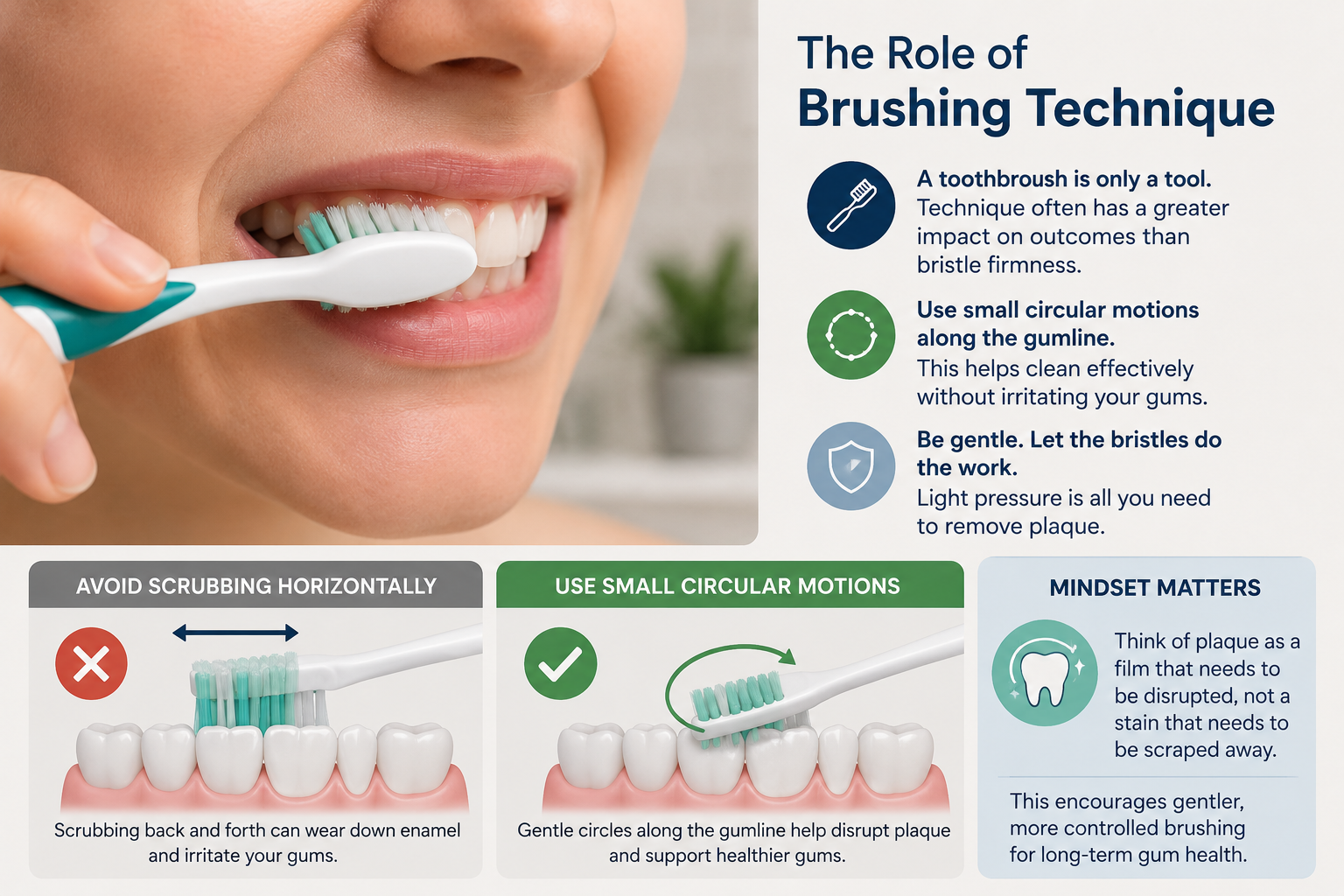
A toothbrush is only a tool.
Technique often has a greater impact on outcomes than bristle firmness.
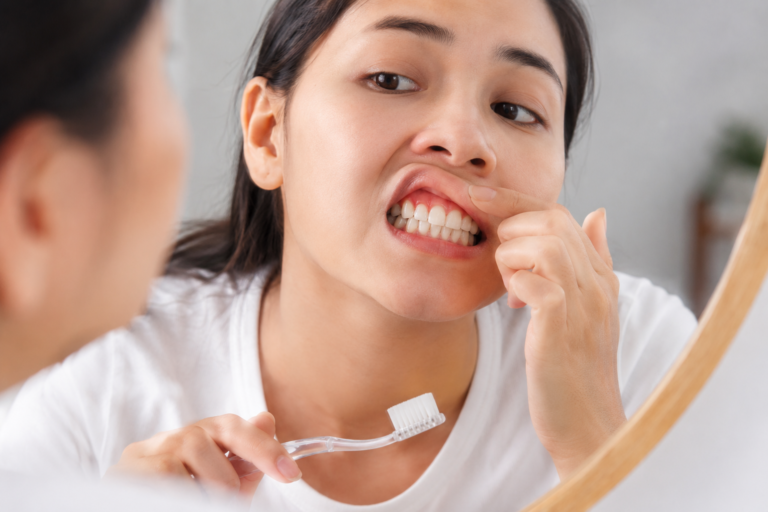
Instead of scrubbing horizontally with force, try guiding the brush gently along the gumline using small circular motions.
Think of plaque as a film that needs to be disrupted rather than a stain that needs to be scraped away.
This mindset tends to encourage gentler, more controlled brushing.
Supporting Gum Health Beyond the Toothbrush
Gum health depends on the overall oral environment.
Brushing is one component of a broader routine that may include flossing, hydration, dietary habits, and regular dental checkups.
If you’re interested in building a more complete routine, our guides on natural oral care habits, swollen gums, supporting gum resilience, strengthening weak gums, and gum disease prevention may be helpful next reads.
Oral Hygiene Tools That Can Complement Brushing
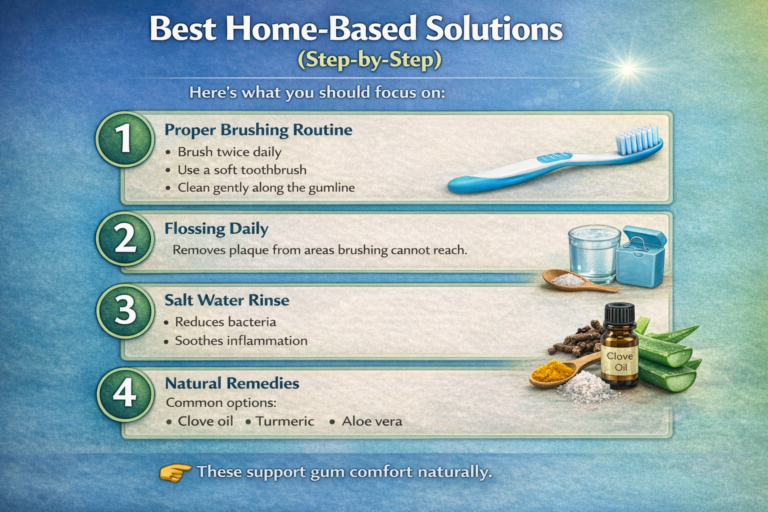
Alongside a soft-bristled toothbrush, some individuals choose to incorporate additional oral hygiene tools such as interdental cleaners, tongue scrapers, water flossers, or alcohol-free mouth rinses.
For readers interested in exploring oral care products, the Dental Pro 7 collection available through CallNature includes products designed to support everyday oral hygiene routines.
You can also browse a variety of oral care tools and accessories through Amazon’s oral care section
The most useful products are usually the ones that fit comfortably into a routine and encourage consistent use rather than occasional intensive cleaning.
What Current Research Suggests
The American Dental Association notes that soft-bristled toothbrushes are appropriate for effectively cleaning teeth and gums for most individuals.
Similarly, guidance from major oral health organizations generally emphasizes gentle plaque removal and proper brushing technique rather than aggressive brushing force.
The broader scientific literature consistently points toward plaque control, gumline cleaning, and routine oral hygiene as key components of maintaining periodontal health.
Conclusion
When comparing a soft toothbrush for gums with hard bristles, the question is not which brush feels stronger. The more useful question is which brush helps maintain effective plaque removal while minimizing unnecessary stress on gum tissue.
For individuals with sensitive gums, tenderness, bleeding, or gum recession, a soft-bristled toothbrush often provides a balance between cleaning efficiency and comfort.
Ultimately, healthy gums depend less on brushing force and more on consistent plaque control, thoughtful technique, and a daily oral care routine that can be maintained comfortably for years.
FAQ – Soft-Bristled Toothbrush vs Hard Bristles for Gum Health
Is a soft toothbrush for gums effective at removing plaque?
Yes. Plaque is relatively soft and can be removed effectively with proper brushing technique and regular oral hygiene habits.
Can hard bristles cause gum irritation?
Hard bristles may contribute to irritation when combined with excessive brushing pressure or aggressive brushing habits.
What is the best toothbrush for sensitive gums?
A toothbrush for sensitive gums typically has soft bristles and a brush head that allows gentle access along the gumline.
Should I switch toothbrushes if my gums bleed?
Bleeding gums can have multiple causes. Reviewing your brushing technique and toothbrush type may help, but persistent bleeding should be evaluated by a dental professional.
References
- American Dental Association (ADA). Toothbrushes and Brushing.
- National Institute of Dental and Craniofacial Research (NIDCR). Gum Disease Information.
- Centers for Disease Control and Prevention (CDC). Oral Health Resources.
- European Federation of Periodontology (EFP). Periodontal Health Guidance.
About the Author
Dental Pro 7 Ingredients Editorial Team
Dental Pro 7 Ingredients Editorial Team researches oral health topics, periodontal wellness, oral microbiome science, and evidence-based hygiene practices. Content is developed through review of scientific literature, public health resources, and current oral care research with the goal of providing educational information for readers seeking to better understand their oral health.
Disclaimer
This article is intended for educational and informational purposes only and does not constitute medical or dental advice. Oral health conditions vary between individuals. Readers experiencing persistent bleeding, swelling, pain, gum recession, or other oral health concerns should consult a licensed dental professional for personalized evaluation and care.