What Healthy Gums Usually Look Like
What Healthy Gums Usually Look Like: Signs, Feel, Color, and Healthy Gum Care
What Healthy Gums Usually Look Like: Last Updated: September 7, 2026 | 8 min read
Healthy gums are easy to overlook. Most people notice their gums when something changes, such as bleeding during brushing, tenderness while eating, or swelling near the gumline.
Healthy gums play an important role in protecting teeth, supporting oral function, and maintaining long-term oral health.
Gum problems can begin with subtle changes. A shift in color, occasional bleeding, or mild puffiness may indicate that gum tissue needs more attention.
Understanding what healthy gums usually look like can help you recognize normal changes and identify signs that may deserve professional evaluation.

Common Misconceptions About Gum Health
Many people judge gum health based only on how their gums feel. However, early gum changes can develop gradually.
“No Pain Means Healthy Gums”
Early gum inflammation can develop without noticeable pain. Comfortable gums may still have plaque buildup or mild irritation.
“Bleeding After Flossing Is Normal”
Occasional bleeding can happen when someone restarts flossing. Repeated bleeding, however, may indicate irritation or inflammation along the gumline.
“Firm Gums Should Feel Tight”
Healthy gums generally feel firm and comfortable around the teeth. Excessive tightness, swelling, or pressure can indicate irritation.
Understanding these misconceptions can help people pay closer attention to changes in their gums and maintain consistent oral care.
Why Gum Appearance Matters
Your gums are living tissue that responds to daily conditions inside your mouth. Plaque, oral bacteria, brushing habits, nutrition, hydration, and stress can influence gum appearance and comfort.
Unlike teeth, gum tissue can change relatively quickly when inflammation develops. Therefore, observing your gums can provide useful clues about your oral health.
The American Dental Association explains that healthy gum tissue should fit closely around the teeth and show minimal signs of swelling or bleeding during routine oral hygiene.
Dental Pro 7 and Everyday Gum Care
A consistent oral care routine can support cleaner teeth, healthier gums, and a balanced oral environment. Dental Pro 7 is designed around a natural, microbiome-focused approach to daily oral wellness.
If you are exploring ways to support healthier-looking gums, learn more about Dental Pro 7 for Receding Gums and Oral Health and its approach to everyday oral care.
Dental Pro 7 for Receding Gums and Oral Health:
Dental Pro 7 for Receding Gums and Oral Health
Explore Dental Pro 7:
Dental Pro 7 Official Website
Dental Pro 7 and Everyday Gum Care
A consistent oral care routine can support cleaner teeth, healthier gums, and a balanced oral environment. Dental Pro 7 is designed around a natural, microbiome-focused approach to daily oral wellness.
Learn more about Dental Pro 7 for receding gums and oral health to understand how its ingredients and oral-care approach may fit into a broader gum-health routine.
Dental Pro 7 for Receding Gums and Oral Health
Explore Dental Pro 7 today and learn how a consistent natural oral-care routine can complement everyday habits for healthier-looking teeth and gums.
Signs of Healthy Gums
Healthy gums tend to share several recognizable characteristics. Natural differences exist between individuals, but several traits are commonly associated with healthy gum tissue.
Healthy Gum Color
One of the most common questions is, “What color are healthy gums?”
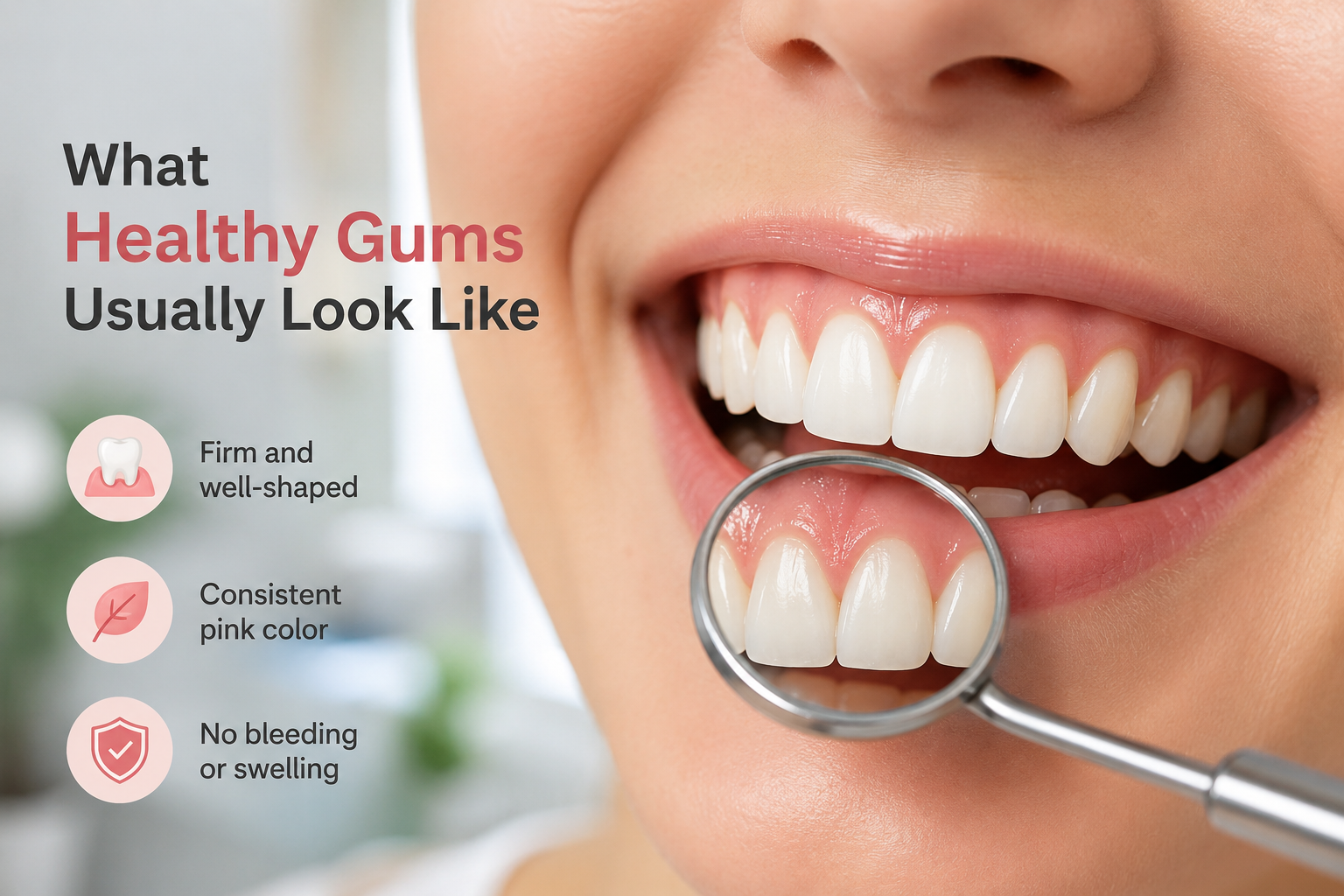
Healthy gums can range from light pink to darker brown or purplish tones. Natural pigmentation varies according to genetics, age, and individual biology.
The key factor is consistency. Healthy gums generally show:
- Consistent coloration
- Even-looking gum tissue
- A firm and natural appearance
- No sudden changes in color
- No persistent areas of intense redness
A sudden change can provide more useful information than the original gum color. For example, gums that become noticeably redder than usual may indicate irritation or inflammation.
Firm and Resilient Gum Texture
Healthy gums typically feel firm rather than soft or spongy. The tissue should appear resilient and well attached around the teeth.
Swollen gums may appear puffy or enlarged. Comparing current photos with older photos can sometimes help reveal subtle changes that are difficult to notice from day to day.
For more information about gum swelling, see our guide on swollen gums causes symptoms and solutions for oral health.
Snug Fit Around the Teeth
Healthy gums form a protective seal around each tooth. They fit closely against the tooth surface and help protect the underlying tissues.
When gums pull away from teeth, spaces or pockets can develop. These areas can collect plaque and bacteria below the gumline.
For a deeper explanation, read gum pockets and inflammation causes symptoms and treatment.
No Regular Bleeding During Routine Cleaning
Healthy gums generally remain comfortable during gentle brushing and flossing. Occasional irritation can happen, especially when oral hygiene habits change.
Repeated bleeding deserves attention because it can be an early sign of gum inflammation.
For additional information, read Why Gums Bleed During Brushing and What It May Indicate.
Healthy Gums and Healthy Teeth Work Together
Healthy gums and clean teeth often develop together because plaque commonly accumulates around the gumline.
As bacterial communities mature, nearby gum tissue can become irritated. This makes daily plaque control an important part of maintaining healthy-looking gums.
Healthy gums reflect more than the absence of visible disease. They can also indicate that consistent daily oral hygiene is supporting a stable oral environment.
Researchers increasingly describe dental plaque as a complex microbial biofilm rather than a simple layer of debris.
How Plaque Develops Along the Gumline
Plaque develops gradually through bacterial attachment and biofilm formation. Understanding this process helps explain why consistent daily oral hygiene matters.
Day 1: Soft Plaque Begins to Form
Within hours after brushing, bacteria naturally present in the mouth can attach to tooth surfaces and the gumline.
These microorganisms interact with saliva proteins and food particles to form a thin, sticky layer called soft plaque.
At this stage, brushing and flossing can help remove the developing plaque.
Days 2–3: Biofilm Matures
When plaque remains on tooth surfaces, bacterial communities continue to multiply and organize into a more complex structure called a biofilm.
Different bacterial species interact within this developing community. The structure can make plaque increasingly resistant to disruption.
Research published through NCBI and PubMed describes mature oral biofilms as environments where potentially harmful bacteria can become more active.
Days 4–7: Gingival Irritation May Begin
As biofilm accumulates around the gumline, bacterial byproducts can activate the body’s natural immune response.
This response may contribute to early gingival irritation. Possible changes include mild redness, tenderness, or bleeding during brushing or flossing.
These changes can provide an early indication that plaque control needs greater attention.
What Healthy Gums Usually Feel Like
Visual appearance is useful, but healthy gums also have recognizable sensations.
Most people with healthy gums rarely notice their gum tissue during everyday activities.
Healthy gums typically:
- Feel comfortable during eating
- Feel firm around the teeth
- Remain comfortable during gentle flossing
- Have little or no tenderness
- Support a comfortable and fresh-feeling mouth
This lack of noticeable discomfort is easy to overlook. Healthy tissues generally perform their functions quietly throughout the day.

The Connection Between the Oral Microbiome and Gum Health
Gum health involves more than simply removing bacteria. The mouth contains hundreds of microbial species that interact with one another and with surrounding tissues.
Healthy gums are generally associated with a balanced oral microbiome rather than the complete elimination of bacteria.
Research from the National Institute of Dental and Craniofacial Research (NIDCR) highlights the importance of the oral microbial environment in maintaining oral health.
Why Bacterial Balance Matters
Many oral bacteria are part of a normal and healthy oral environment. Beneficial microorganisms can compete with potentially harmful microbes and contribute to microbial balance.
Problems can develop when the balance of the oral microbiome shifts. Factors such as poor oral hygiene, smoking, dry mouth, dietary habits, and reduced saliva production can influence this environment.
One important process is biofilm formation. Oral bacteria attach to tooth surfaces and gradually develop into structured communities known as dental plaque.
As biofilm matures, it becomes more difficult to remove and can encourage bacterial accumulation near the gumline.
Research published in PubMed suggests that microbial imbalance can activate inflammation pathways within gum tissue. This may contribute to redness, swelling, and bleeding.
Can Healthy Gums Still Contain Harmful Bacteria?
Yes. Even healthy mouths contain microorganisms that can contribute to oral problems under certain conditions.
The important distinction is microbial balance. Beneficial bacteria, saliva, and effective oral hygiene habits help maintain a stable oral environment.
This is why supporting the overall oral environment can be an important part of daily gum care.
What Dental Professionals Assess Beyond Color
Gum color provides useful information, but dental professionals evaluate several additional characteristics.
One important factor is gum texture. Healthy gums generally appear firm and resilient.
Dentists also evaluate bleeding tendency. Gums that bleed easily during routine cleaning can indicate irritation or inflammation.
Another factor is plaque accumulation, particularly around the gumline where bacterial biofilm commonly develops.
Professionals also examine gum attachment. Healthy gums fit closely around teeth and help create a protective barrier.
Dental professionals may also measure pocket depth, which describes the space between the tooth and surrounding gum tissue. Deeper pockets can provide areas where plaque and bacteria accumulate below the gumline.
Together, these observations provide a more complete picture of gum health than color alone.
A Real-World Observation
Long-term oral health research emphasizes the value of consistency. Simple habits performed regularly can support oral health more effectively than constantly changing routines.
Gentle brushing, regular interdental cleaning, adequate hydration, balanced oral bacteria, and sustainable daily habits all contribute to a practical gum-care routine.
Dental Pro 7 is one example of a microbiome-centered oral-care product discussed in relation to gum health and oral wellness.
The article why Dental Pro 7 is considered a unique professional-strength natural dental solution for teeth and gum health is already linked here and provides a deeper discussion of this approach.
What Changes May Indicate Gum Problems?
Understanding healthy gums becomes easier when you know which changes deserve attention.
Persistent Redness
Localized or persistent redness along the gumline may indicate inflammation.
Swelling or Puffiness
Healthy gums generally maintain a defined contour around the teeth. Puffy tissue may reflect irritation associated with plaque accumulation.
Frequent Bleeding
Repeated bleeding during brushing or flossing can indicate gum irritation or inflammation and deserves attention.
Receding Gumlines
A gumline that gradually moves away from the teeth can expose root surfaces and increase sensitivity.
Learn more through our guide on receding gums and oral health.
Deep Spaces Around Teeth
Deeper spaces between teeth and gums can indicate periodontal pockets. A dental professional can evaluate these areas and recommend appropriate care.
For a broader overview, read Gum Disease: Causes, Symptoms, Treatment and Prevention Guide.
How to Maintain Healthy Gums
Healthy gums usually reflect a combination of daily habits rather than one product or technique.
Hydration and Saliva Support Oral Health
Many people focus on brushing and flossing while overlooking the role of saliva.
Saliva helps wash away food particles, neutralize acids, and support a balanced oral environment.
Reduced saliva flow can allow plaque and bacteria to remain around teeth and the gumline for longer periods.
Mouth breathing, particularly during sleep, can also contribute to dry mouth and affect overall oral comfort.
The Role of Water Flossers in Supporting Healthy Gums
Alongside brushing and traditional flossing, some people use water flossers to clean between teeth and around the gumline.
A water flosser directs a stream of water toward areas that can be difficult to reach with a toothbrush.
It can complement daily oral hygiene by helping remove food particles and debris.
For more information, read water flossers and gum care.
Maintain Consistent Plaque Removal
Gentle brushing twice daily and regular interdental cleaning remain foundational oral-care practices.
Consistent plaque removal helps keep bacterial accumulation around the gumline under control.
You can also explore Tips for Preventing Plaque Naturally for practical daily-care ideas.
Use a Gentle Toothbrush
A soft-bristled toothbrush can effectively clean teeth while providing a comfortable experience for gum tissue.
Choose a toothbrush that allows you to clean the gumline gently and thoroughly.
For more information, read Soft-Bristled Toothbrush vs Hard Bristles for Gum Health.
Follow a Sustainable Oral Care Routine
Healthy gums benefit from routines that are realistic enough to maintain every day.
Brushing, interdental cleaning, hydration, balanced nutrition, and regular dental visits can work together to support long-term oral wellness.
For additional guidance, explore Natural Oral Care Routine and How to Maintain Healthy Gums: Simple Daily Habits for Better Oral Health.
Choosing Oral Care Products Thoughtfully
Products can support an oral-care routine, but daily habits remain the foundation of gum health.
When reviewing oral-care options, consider ingredients, intended use, comfort, and how easily the product fits into your routine.
You can explore product information through CallNature for additional oral-care resources.
Focus on products that complement your needs and can be used comfortably as part of a consistent long-term routine.
When Should You Seek Professional Evaluation?
Consider scheduling a dental evaluation when you notice:
- Bleeding that continues for several days
- Persistent swelling
- Gum recession
- Ongoing bad breath
- Tooth mobility
- Continuing discomfort around the gumline
Early professional evaluation can help identify developing gum concerns and provide appropriate treatment options.
Common Signs That Healthy Gums Are Starting to Change
Changes in gum health often begin subtly.
One early sign can be a shift in color, such as gums appearing redder than their usual shade.
Another common indicator is repeated bleeding during flossing, especially when it occurs in the same area.
Some people may also notice mild puffiness along the gumline. The tissue may appear less defined around the teeth.
Persistent morning bad breath can also occur alongside increased bacterial activity or changes in the oral environment.
Recognizing these changes early can encourage timely attention to oral hygiene and professional dental care.
Conclusion: What Healthy Gums Usually Look Like
Healthy gums typically have a consistent natural color, feel firm, fit closely around the teeth, and remain comfortable during routine cleaning.
Because natural gum color varies, changes from your usual appearance can provide more useful information than comparing your gums with someone else’s.
Consistent brushing, interdental cleaning, hydration, balanced oral care, and regular dental checkups can help support healthy gums and a balanced oral environment.
FAQ
What Color Are Healthy Gums?
Healthy gums can range from light pink to darker brown or purplish tones, depending on natural pigmentation.
The key is consistency and the absence of persistent changes such as redness, swelling, or irritation.
Do Healthy Gums Bleed When Flossing?
Healthy gums generally remain comfortable during gentle flossing.
Frequent bleeding can indicate irritation, plaque buildup, or inflammation and deserves attention.
How Can I Tell If My Gums Are Healthy?
Healthy gums typically feel firm, fit closely around the teeth, and remain comfortable during routine brushing and flossing.
Regular dental examinations provide a more complete assessment.
Can Gums Look Healthy but Still Have Problems?
Yes. Early gum problems can develop with subtle or limited visible changes.
Regular dental checkups can help identify concerns that are difficult to recognize at home.
Why Do My Gums Bleed in Only One Area?
Localized bleeding can occur where plaque accumulates more easily.
Crowded teeth, dental work, or hard-to-reach areas can make effective cleaning more challenging.
Can Dry Mouth Affect Gum Health?
Yes. Reduced saliva flow can allow plaque and bacteria to remain around the teeth and gumline for longer periods.
Supporting hydration and discussing persistent dry-mouth symptoms with a dental professional can help maintain oral comfort.
About the Author
Dental Pro 7 Ingredients Editorial Team
The Dental Pro 7 Ingredients Editorial Team researches oral health topics using peer-reviewed scientific literature, dental organization resources, and evidence-based preventive care guidelines.
Our goal is to provide practical educational content that helps readers better understand oral health and make informed decisions about daily oral care.
Disclaimer
This article is intended for educational and informational purposes only. It should not be considered medical or dental advice.
Individual oral health conditions vary. Consult a licensed dentist or qualified healthcare professional regarding diagnosis, treatment options, or specific oral health concerns.
External References
- National Institute of Dental and Craniofacial Research (NIDCR)
- American Academy of Periodontology (AAP)
- Centers for Disease Control and Prevention (CDC) Oral Health Resources