Bleeding Gums While Brushing
Bleeding Gums While Brushing: Causes, Treatment, and What to Do
Bleeding gums while brushing: Noticed blood while brushing your teeth?
It can feel alarming—especially if it happens often. Many people immediately think they’re brushing too hard… or worse, they stop brushing altogether.
👉 But here’s the truth:
Bleeding gums while brushing are usually a sign your gums need better care—not less brushing.
Why Do Gums Bleed While Brushing?
This problem is more common than you think.
The most common causes include:
- Plaque buildup along the gumline
- Gum inflammation (early stage)
- Brushing too aggressively
- Poor oral hygiene habits
When bacteria accumulate, they irritate the gums—making them sensitive and prone to bleeding.
👉 Sometimes, the missing piece isn’t effort—it’s the right support.
What Happens If You Ignore Bleeding Gums?
Many people ignore bleeding gums, hoping it will go away.
But over time, it can lead to: Increased inflammation. Persistent bad breath. Gum sensitivity. More frequent bleeding
👉 That’s why early action is important.
Persistent gum inflammation often contributes to unpleasant breath. Learn how Dental Pro 7 for bad breath supports fresher breath while promoting healthier gums.
Biggest Mistake: Stopping Brushing
It might feel logical to stop brushing when you see blood.
But this actually makes things worse.
👉 Less brushing = more plaque buildup = more irritation
Instead, the goal is to improve your brushing method.
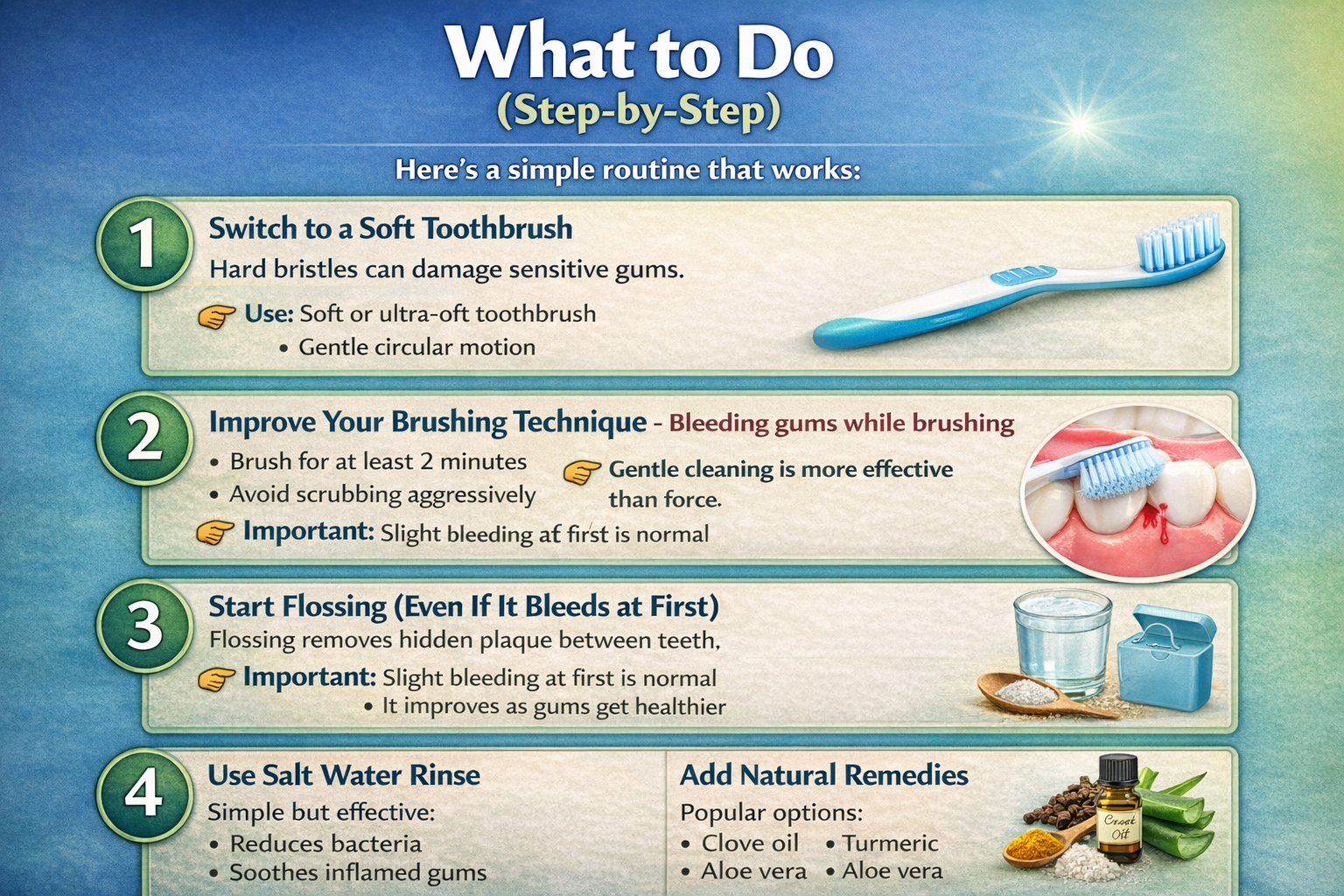
What to Do (Step-by-Step)
Here’s a simple routine that works:
1. Switch to a Soft Toothbrush
Hard bristles can damage sensitive gums.
👉 Use:
- Soft or ultra-soft toothbrush
- Gentle circular motion
2. Improve Your Brushing Technique – Bleeding gums while brushing
- Brush for at least 2 minutes
- Avoid scrubbing aggressively
- Focus on the gumline
👉 Gentle cleaning is more effective than force.
Could Your Toothbrush Be Contributing to Gum Irritation?
When gums bleed during brushing, the immediate assumption is often that brushing should be stopped or done less frequently. In reality, maintaining plaque control remains important, but the way you brush—and the toothbrush you use—can influence how your gums respond.
A toothbrush with overly firm bristles, especially when combined with aggressive brushing pressure, may increase irritation around already sensitive gum tissue. By contrast, a softer brush paired with gentle, controlled movements along the gumline may provide a more comfortable cleaning experience while still helping remove plaque effectively.
If you’re wondering whether your toothbrush could be affecting your gum comfort, our guide on soft-bristled toothbrushes versus hard bristles for gum health explores how bristle firmness and brushing technique work together to support healthier gums.
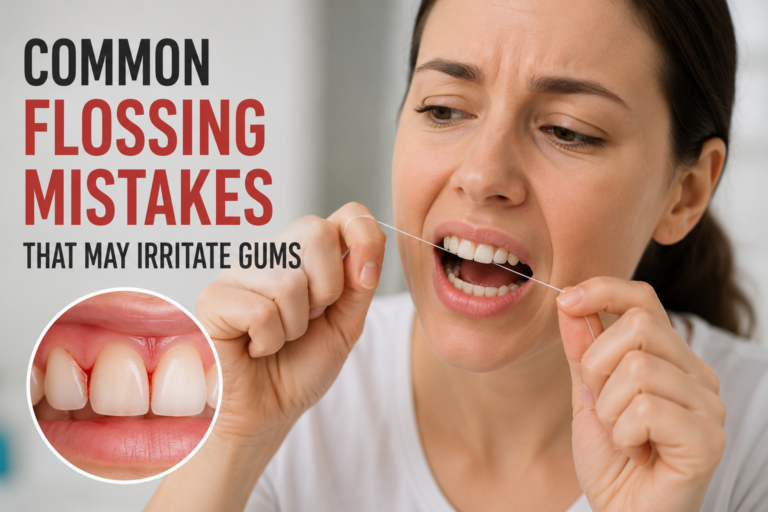
3. Start Flossing (Even If It Bleeds at First)
Flossing removes hidden plaque between teeth.
👉 Important:
- Slight bleeding at first is normal
- It improves as gums get healthier
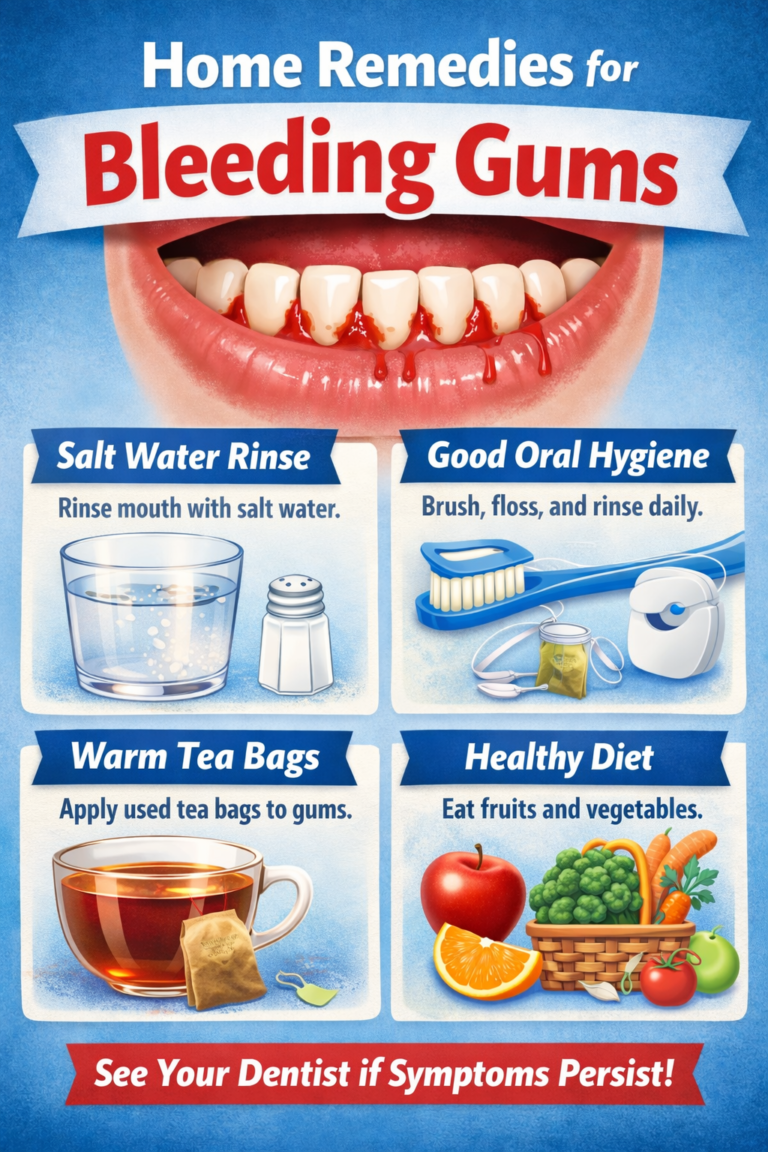
4. Use Salt Water Rinse
Simple but effective:
- Reduces bacteria
- Soothes inflamed gums
5. Add Natural Remedies
Many natural remedies rely on botanical extracts. Discover the best essential oils for gum health and their traditional role in supporting healthy gums.
Popular options:
- Clove oil
- Turmeric
- Aloe vera
These natural options may help support gum comfort when combined with good oral hygiene, although they should not replace professional dental care for persistent symptoms.
👉 These help support gum comfort naturally.
Why the Problem Keeps Coming Back
You may follow all steps… and still notice bleeding sometimes.
👉 This happens because:
The root issue—bacteria buildup—is not fully controlled.
Home remedies and better brushing help, but they don’t always solve the underlying cause.
Supporting Gum Health Beyond Daily Brushing
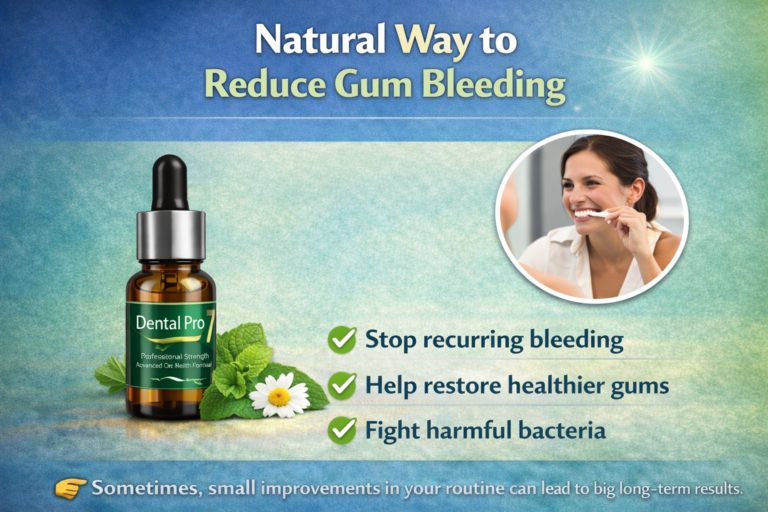
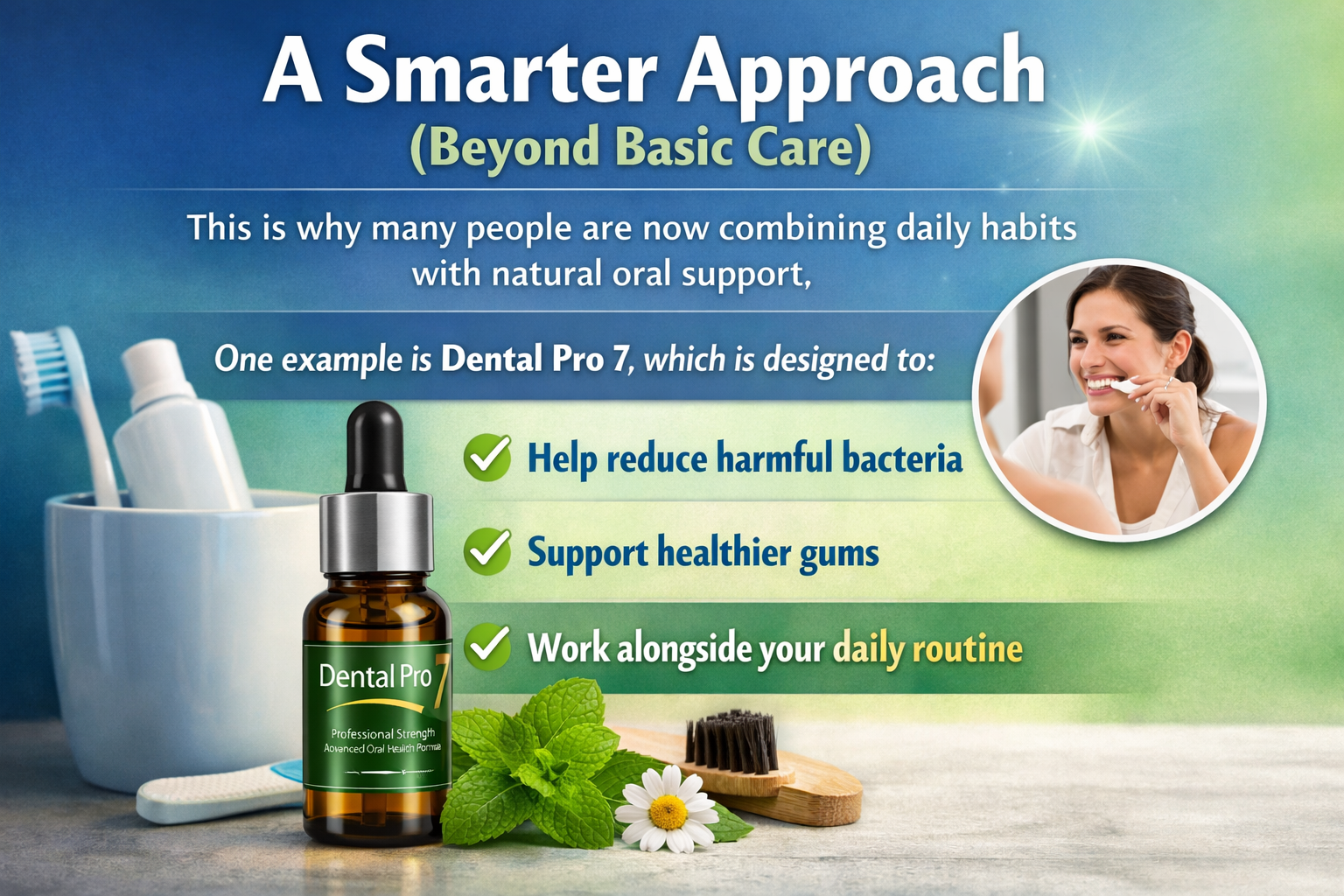
This is why many people are now combining daily habits with natural oral support.
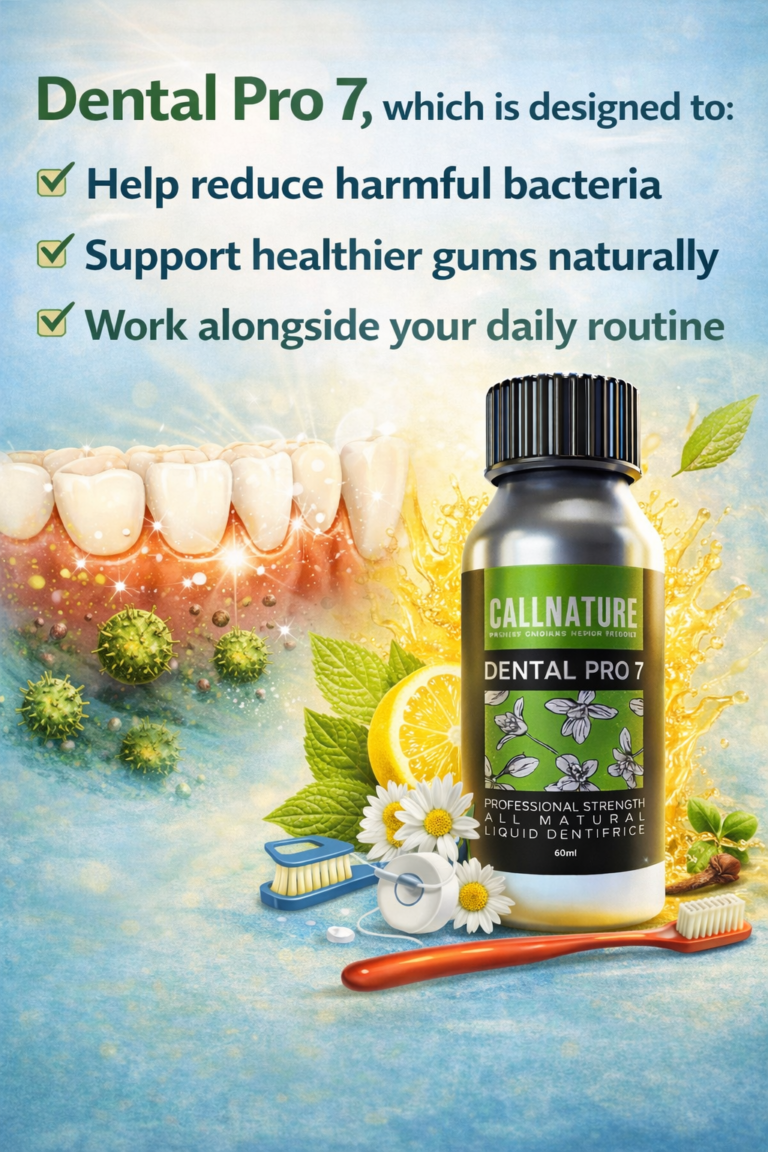
One example is Dental Pro 7, which is designed to:
- Help reduce harmful bacteria
- Support healthier gums
- Work alongside your daily routine
Before adding a botanical oral care product to your routine, read this complete Dental Pro 7 review covering ingredients, benefits, and scientific evidence.
Understanding proper usage is important. Explore the Dental Pro 7 safety guide for information about ingredients, recommended use, and possible side effects.
👉 It’s not a replacement—it’s an addition to your routine.
How Long Until It Improves?
With consistent care:
- 3–5 days → less irritation
- 1–2 weeks → reduced bleeding
- Ongoing → stronger gums
👉 Consistency is the key.
Recovery time varies depending on the underlying cause, plaque control, and consistency of daily oral hygiene practices.
Related Guide
If you want a complete approach, read:
👉 Combining these helps improve results faster.
Frequently Asked Questions
Why do my gums bleed when I brush?
Usually due to plaque buildup and gum inflammation.
Should I stop brushing if my gums bleed?
No. Continue brushing gently with proper technique.
How can I stop bleeding quickly?
Use soft brushing, flossing, and salt water rinses consistently.
Is it serious?
It can be an early sign of gum problems—best to address early.
Final Thoughts
Bleeding gums while brushing may feel concerning—but it’s often manageable with the right approach.
The key is to:
- Improve your brushing habits
- Stay consistent
- Support your gums properly
👉 Small changes can lead to big improvements.
Want Better Results?
If your gums keep bleeding despite trying different methods, it may be time to upgrade your routine.
Many people choose botanical oral care products as part of a complete oral hygiene routine to help support healthier gums alongside regular brushing and flossing
👉 Sometimes, the missing piece isn’t effort—it’s the right support.