Tongue Bacteria and Bad Breath
Tongue Bacteria and Bad Breath: What Causes Morning Breath? Understanding the Formula
Waking up with unpleasant breath is one of the most common oral health experiences. Even individuals who brush carefully before bed may notice a stale taste or odor in the morning. While food choices, dry mouth, and oral hygiene habits all play a role, the tongue itself is often an overlooked source of morning breath.
The human tongue is home to millions of microorganisms. Most are harmless, and many contribute to a healthy oral ecosystem. However, certain bacterial species can break down proteins and release sulfur-containing compounds that create noticeable odors.
Understanding the relationship between tongue bacteria, morning breath, and the broader causes of bad breath provides a more complete picture than simply reaching for mouthwash. The issue often involves an entire microbial environment rather than a single problem area.
Why Does Morning Breath Happen?
Morning breath is not necessarily a sign of poor oral hygiene.
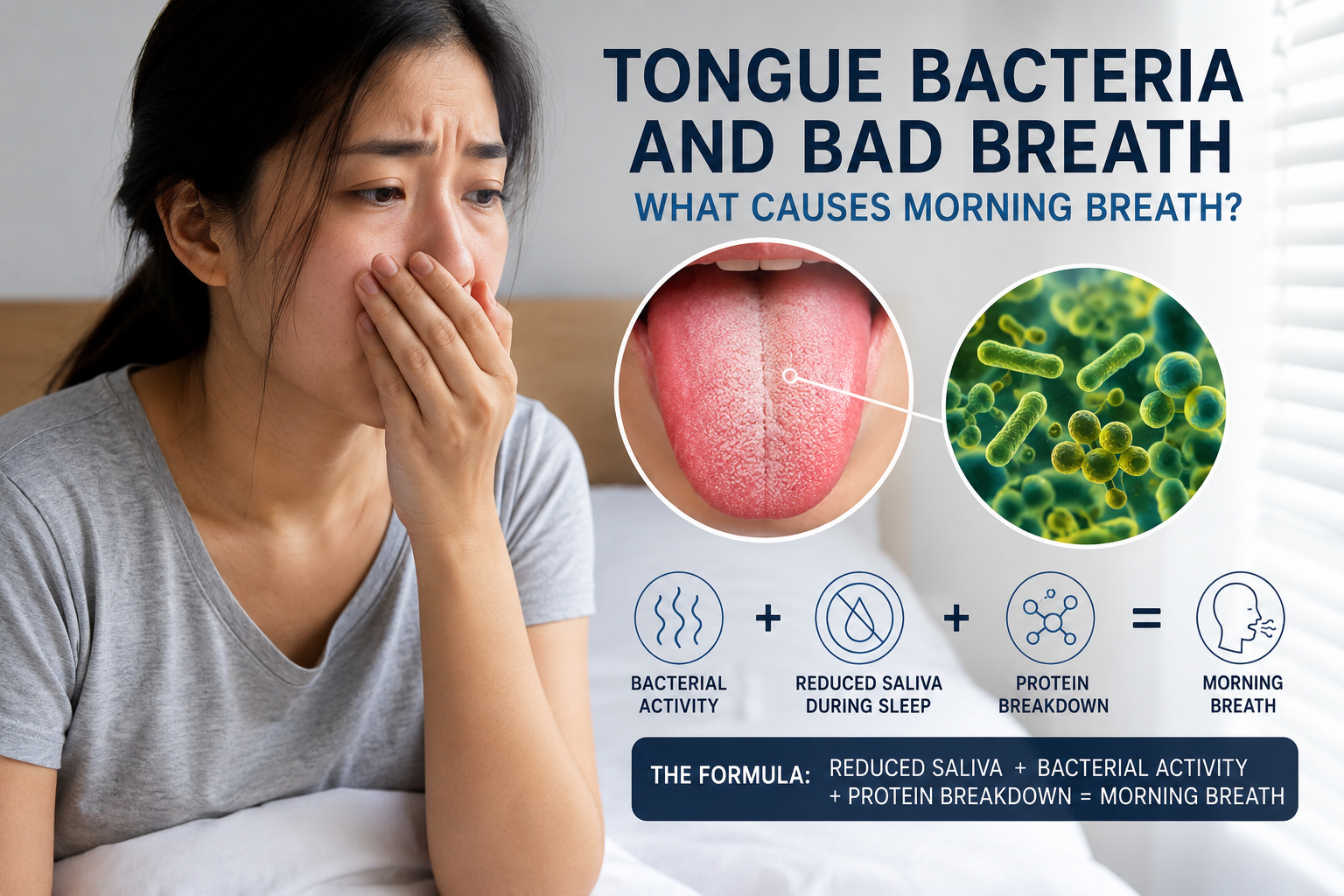
During sleep, saliva production naturally decreases. Saliva normally helps rinse away food particles, regulate microbial growth, and dilute odor-producing compounds. When saliva flow slows overnight, bacterial activity becomes more noticeable.
The process can be simplified into a basic formula:
Reduced Saliva + Bacterial Activity + Protein Breakdown = Morning Breath
This explains why even individuals with healthy teeth can experience temporary bad breath after waking.
Researchers from the National Institute of Dental and Craniofacial Research (NIDCR) note that saliva plays a critical role in maintaining oral balance. When saliva levels drop, microorganisms have more opportunity to metabolize proteins and release volatile sulfur compounds (VSCs), which are strongly associated with oral malodor.
The Tongue: A Unique Habitat for Oral Bacteria
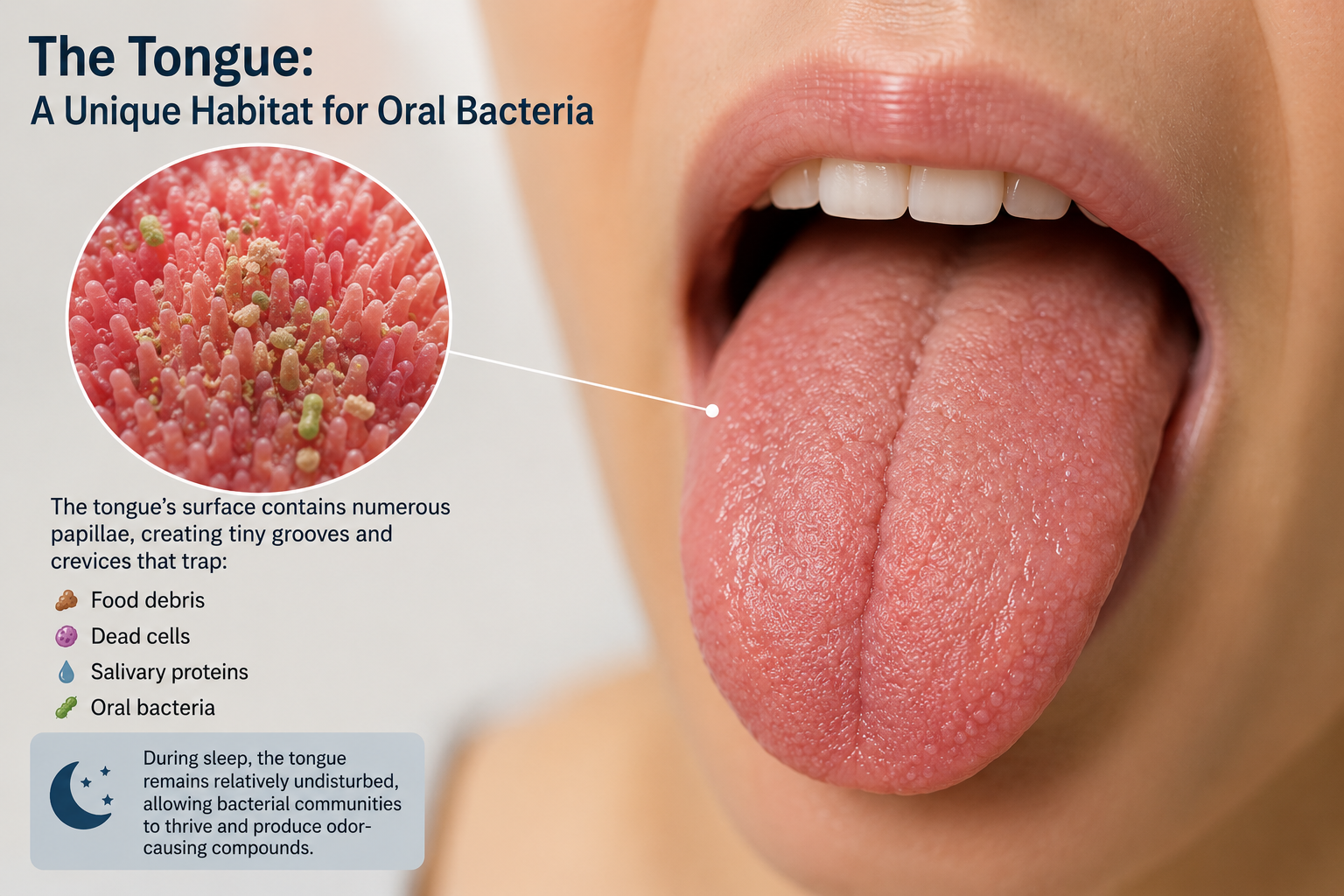
The tongue differs significantly from the smooth surfaces of teeth.
Its surface contains numerous papillae, microscopic structures that create tiny grooves and crevices. These areas can trap:
- Food debris
- Dead cells
- Salivary proteins
- Oral bacteria
From a microbiological perspective, the tongue functions almost like a densely populated ecosystem.
Researchers have identified the tongue dorsum (the upper surface of the tongue) as one of the primary reservoirs of odor-producing bacteria in the mouth. Species belonging to Fusobacterium, Prevotella, Porphyromonas, and Treponema have all been associated with sulfur compound production.
What makes this important is that the tongue often remains relatively undisturbed during sleep. While chewing, drinking, and speaking help create movement during the day, nighttime conditions allow bacterial communities to remain largely undisturbed for several hours.
Understanding the Oral Biofilm Connection
Tongue bacteria rarely exist in isolation.
Microorganisms organize themselves into structured communities known as biofilms. These biofilms form on the tongue, teeth, and gum tissues.
For a detailed explanation of how these microbial communities develop, see our guide on oral biofilm and plaque formation.
Biofilms offer protection to bacteria and allow different species to interact with one another. Within these communities, protein-degrading organisms can thrive and contribute to unpleasant odors.
A useful real-world observation is that morning breath often becomes more noticeable when plaque accumulation increases. This suggests that the entire oral environment—not just the tongue—contributes to odor production.
How Tongue Bacteria Produce Odors
Sulfur Compounds and Bad Breath
The characteristic smell associated with morning breath usually comes from volatile sulfur compounds.
These compounds are generated when bacteria break down amino acids containing sulfur, including:
- Cysteine
- Methionine
The resulting compounds include:
- Hydrogen sulfide
- Methyl mercaptan
- Dimethyl sulfide
Hydrogen sulfide often produces a smell similar to rotten eggs. Methyl mercaptan is sometimes described as cabbage-like or sulfurous.
Research published in the Journal of Breath Research has consistently linked elevated sulfur compound levels with oral malodor.
Why Protein Matters
Interestingly, bacteria responsible for odor production tend to feed on proteins rather than sugars.
Sources may include:
- Residual food particles
- Mucus
- Salivary proteins
- Dead epithelial cells
This explains why individuals can experience morning breath even after avoiding sugary foods before bed.
The Oral Microbiome and Breath Quality
The conversation about bad breath has gradually shifted from “eliminating bacteria” to understanding bacterial balance. The mouth contains hundreds of microbial species. Not all contribute to odor formation.
In fact, certain organisms may compete with odor-producing species and help maintain ecological stability. Our article on oral microbiome balance and dental health explores this relationship in greater detail.
A healthier oral ecosystem is generally characterized by diversity rather than dominance by a few aggressive bacterial groups. This ecological perspective represents one of the more important developments in modern oral microbiome research.
Why Microbiome-Focused Oral Care Is Receiving More Attention
As research into oral microbiome health continues to expand, many people are beginning to view bad breath through a broader lens. Rather than focusing solely on masking odors, modern oral wellness strategies increasingly emphasize supporting a healthier balance between beneficial and odor-producing bacteria throughout the mouth.
This shift reflects a growing understanding that fresh breath is often connected to the overall condition of the oral ecosystem. Factors such as saliva production, tongue biofilms, gum health, hydration, and microbial diversity all work together to influence breath quality.
As a result, microbiome-focused oral care products have gained increasing attention among individuals interested in supporting long-term oral wellness. One example is Dental Pro 7, which is frequently discussed for its emphasis on beneficial bacteria, oral microbiome balance, and healthy gums.
Readers interested in learning more can explore why Dental Pro 7 is considered a unique professional-strength natural dental solution for teeth and gum health.
Why Dry Mouth Makes Morning Breath Worse
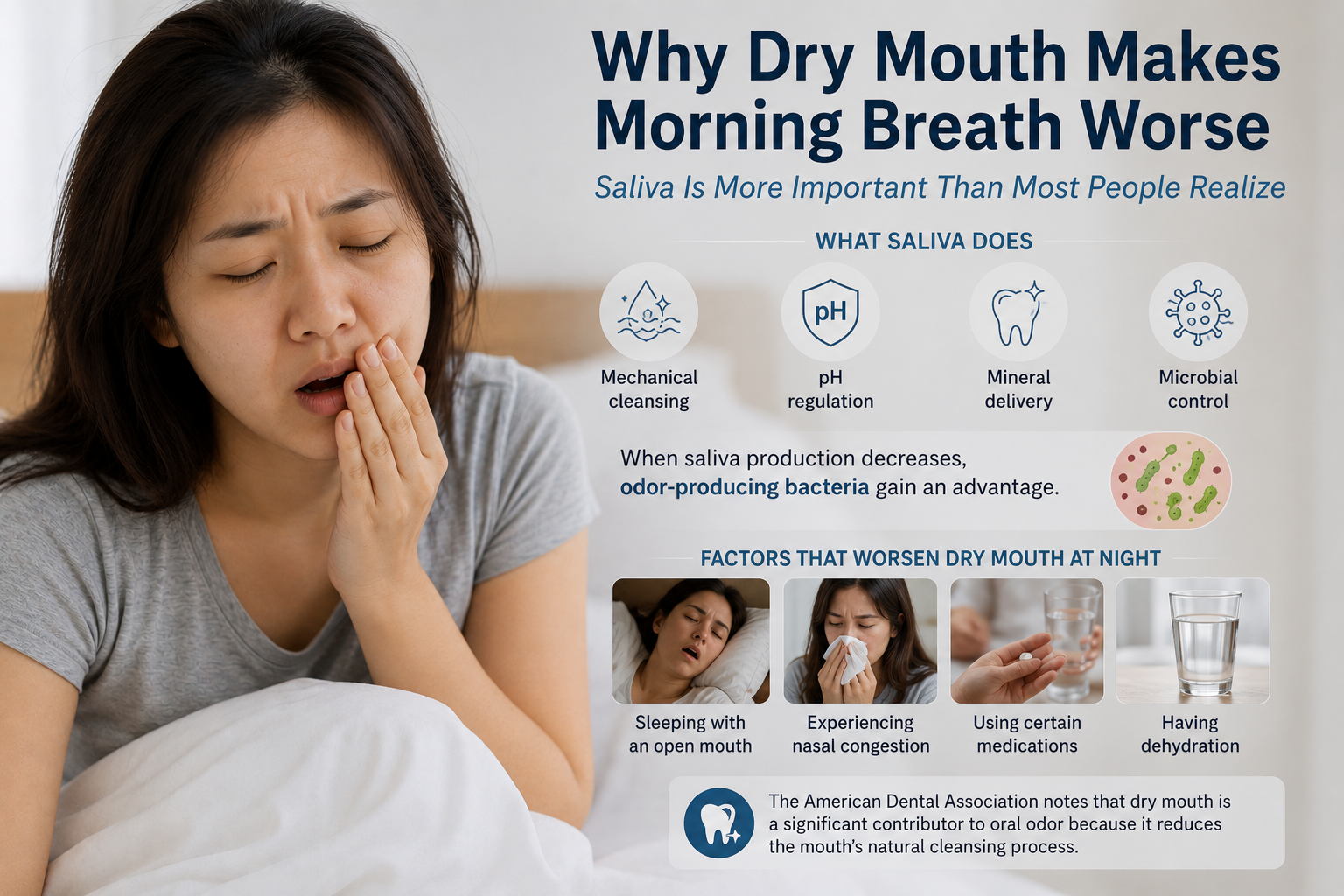
Saliva Is More Important Than Most People Realize
Saliva performs several functions simultaneously:
- Mechanical cleansing
- pH regulation
- Mineral delivery
- Microbial control
When saliva production decreases, odor-producing bacteria gain an advantage.
Mouth breathing during sleep can further reduce moisture levels.
Individuals frequently report stronger morning breath when:
- Sleeping with an open mouth
- Experiencing nasal congestion
- Using certain medications
- Having dehydration
The American Dental Association notes that dry mouth is a significant contributor to oral odor because it reduces the mouth’s natural cleansing process.
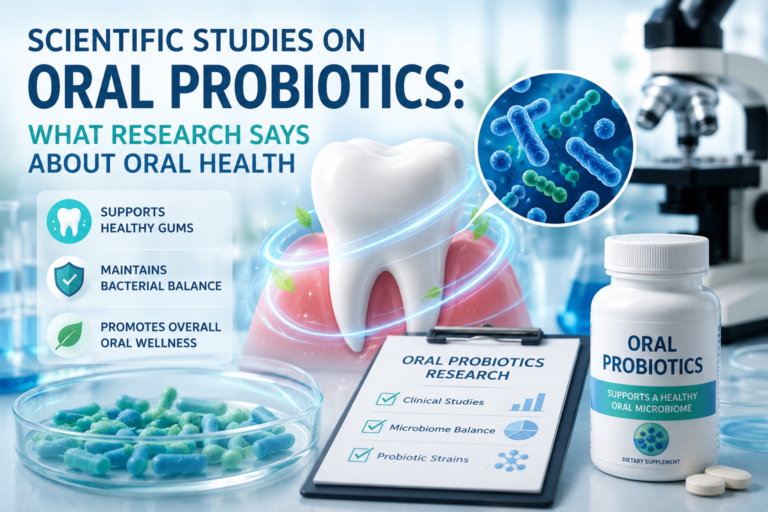
Can Oral Probiotics Influence Tongue Bacteria?
The idea of introducing beneficial bacteria into the oral environment has attracted growing scientific interest.
Unlike traditional approaches that focus solely on reducing bacterial populations, oral probiotics aim to support a healthier microbial balance.
You can learn more in our article What Are Oral Probiotics?
Several strains have been studied for their potential influence on oral ecology, including:
- Streptococcus salivarius K12
- Streptococcus salivarius M18
- Certain Lactobacillus species
Research remains ongoing, and probiotics should not be viewed as a replacement for routine oral hygiene. However, they represent an interesting area of investigation within microbiome science.
Further reading: How Oral Probiotics Work and
Probiotics for Bad Breath
Everyday Habits That Influence Tongue Bacteria
Tongue Cleaning
One practical observation is that individuals who gently clean their tongue often report a fresher feeling upon waking.
Tongue cleaning can help remove:
- Surface debris
- Bacterial accumulation
- Protein residues
However, excessive scraping may irritate tissue and is generally unnecessary.
Hydration
Hydration supports saliva production.
Even mild dehydration can contribute to a drier oral environment overnight.
Diet Patterns
Diet influences oral microbial populations.
Foods rich in fiber may help stimulate saliva flow, while highly processed diets may alter the oral ecosystem in less favorable ways.
When Morning Breath May Signal a Larger Issue
Occasional morning breath is normal.
Persistent bad breath throughout the day deserves closer attention.
Possible contributing factors include:
- Gum disease
- Significant plaque accumulation
- Untreated tooth decay
- Chronic dry mouth
- Tonsil stones
- Sinus conditions
- Certain gastrointestinal disorders
In these situations, identifying the underlying cause is often more productive than attempting to mask symptoms.
A Practical Perspective on Tongue Bacteria and Morning Breath
One of the biggest misconceptions about bad breath is the idea that it comes from a single “bad” bacterium.
The reality is more complex.
Morning breath typically reflects interactions between:
- Saliva levels
- Tongue bacteria
- Oral biofilms
- Diet
- Hydration
- Overall microbiome balance
The tongue serves as an important microbial habitat, but it functions as part of a larger oral ecosystem.
Understanding that ecosystem offers a more realistic approach to managing breath quality than focusing on quick fixes alone.
External References
- National Institute of Dental and Craniofacial Research (NIDCR) – Oral Health Resources
https://www.nidcr.nih.gov - American Dental Association (ADA) – Bad Breath Information
https://www.ada.org - Journal of Breath Research – Oral Malodor Studies
https://iopscience.iop.org/journal/1752-7163 - National Library of Medicine (PubMed) – Oral Microbiome Research
https://pubmed.ncbi.nlm.nih.gov - Mayo Clinic – Dry Mouth Overview
https://www.mayoclinic.org
Oral Care Resources
If you’re interested in learning more about oral microbiome support and probiotic-based approaches, information is available through CallNature’s Dental Pro 7 product
For readers who prefer comparing oral care tools, tongue cleaners, water flossers, and related products, a selection of oral care items can also be found on Amazon
FAQ
Does tongue bacteria always cause bad breath?
No. The tongue naturally contains bacteria, many of which are beneficial. Bad breath usually develops when certain bacteria produce sulfur compounds in sufficient amounts to create noticeable odors.
Why is morning breath stronger after sleeping?
Saliva production decreases during sleep. Lower saliva levels allow odor-producing bacteria to become more active overnight.
Can brushing teeth alone eliminate morning breath?
Brushing helps, but tongue bacteria and oral biofilms can still contribute to odors. Hydration, tongue cleaning, and overall oral health also matter.
Are oral probiotics proven to stop bad breath?
Research is ongoing. Oral probiotics may help support microbial balance, but they should be viewed as one part of a broader oral health routine.
Is morning breath normal?
Yes. Temporary morning breath is common and usually results from normal biological processes during sleep.
About the Author
Dental Pro 7 Ingredients Editorial Team
The Dental Pro 7 Ingredients Editorial Team researches oral microbiome science, probiotic-based oral health approaches, gum health, and evidence-informed oral care strategies. Content is developed using peer-reviewed research, public health resources, and current scientific literature to provide balanced educational information for readers.
Disclaimer
This article is intended for educational and informational purposes only. It does not provide medical advice, diagnosis, or treatment recommendations. Readers experiencing persistent bad breath, gum concerns, oral discomfort, or other dental symptoms should consult a qualified dental professional or healthcare provider for individualized evaluation.