Oil Based Gum Treatment vs Mouthwash — What Works Better?
Oil Based Gum Treatment vs Mouthwash — What Works Better?
Oil Based Gum Treatment: Many people exploring natural oral care ask an important question: oil based gum treatment vs mouthwash — which works better? Traditional mouthwash has been widely used for decades, but oil-based gum concentrates and botanical oil treatments are gaining popularity in natural gum care circles. Understanding the differences in mechanism, contact time, and clinical support can help you choose the right supportive method.
Dental authorities such as the American Dental Association (ada.org) and research institutions like the National Institute of Dental and Craniofacial Research (nidcr.nih.gov) emphasize that any rinse or gum treatment is supportive — not a replacement — for brushing, flossing, and professional dental care. Still, delivery method matters. The way an antimicrobial agent contacts the gumline influences effectiveness.
This guide compares oil based gum treatment vs mouthwash using dental science principles, microbiology research, and natural oral care practices.
Understanding Gum Disease Support Basics
According to cdc.gov, gum disease begins when bacterial plaque accumulates along the gumline and triggers inflammation. If not disrupted daily, plaque biofilm matures and becomes harder to remove.
Core gum support steps:
- mechanical plaque removal
- gumline cleaning
- bacterial load reduction
- inflammation control
- saliva support
Both mouthwash and oil-based gum treatments aim to help with bacterial control — but they deliver active ingredients differently.
What Is a Traditional Mouthwash?
A mouthwash is typically a water-based rinse designed to be swished around the mouth and then expelled.
Dental school education materials (.edu) classify mouthwashes into:
- cosmetic rinses (breath focused)
- fluoride rinses
- antiseptic rinses
- alcohol-free antimicrobial rinses
How Mouthwash Works
Water-based mouthwash works by:
- bathing oral tissues briefly
- delivering antimicrobial agents
- reducing planktonic (free-floating) bacteria
- reaching multiple surfaces quickly
Typical swish time:
- 20–60 seconds
Contact time is short but broad.
Limitations of Traditional Mouthash
Dental hygiene programs (.edu) also note limitations:
- short tissue contact time
- dilution by saliva
- limited penetration into biofilm
- reduced retention after spitting
Alcohol-based rinses may also:
- dry oral tissues
- irritate sensitive gums
- worsen dry mouth risk
Dry mouth is a known risk factor for bacterial overgrowth (.gov oral health sources).
What Is an Oil Based Gum Treatment?
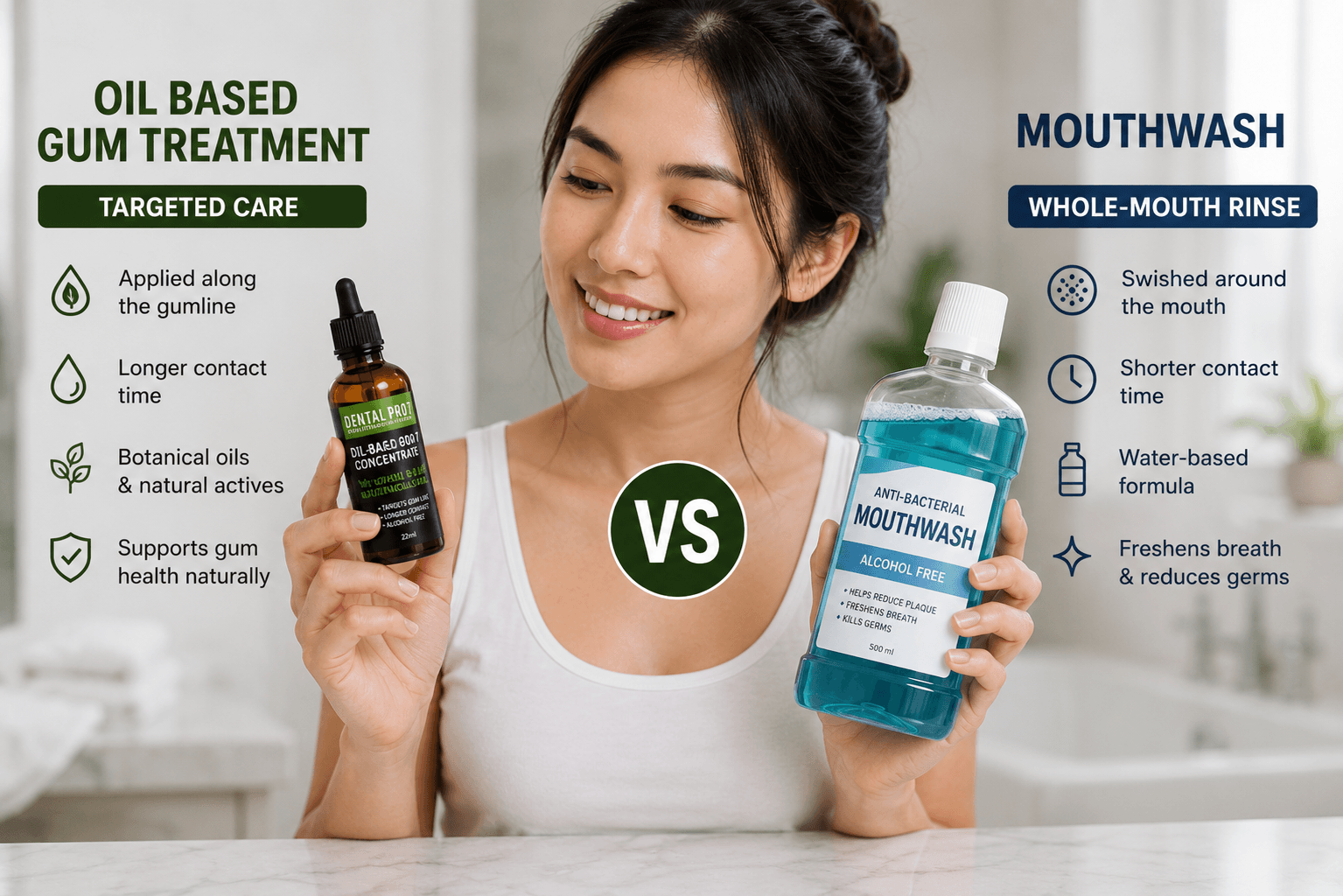
Oil-based gum treatment uses a botanical oil concentrate applied directly to the gumline rather than swished quickly like a rinse.
Instead of whole-mouth exposure, the approach focuses on:
- targeted gum margin delivery
- longer retention
- lipid-based antimicrobial compounds
- reduced dilution
Educational product resources such as dentalpro7.com describe oil-based gum concentrate systems designed for gumline-focused application rather than rinse-and-spit use.
Oil Based Gum Treatment vs Mouthwash — Delivery Difference
The biggest difference is delivery physics.
Mouthwash Delivery
- water carrier
- short exposure
- full-mouth coverage
- quick dilution
Oil-Based Delivery
- lipid carrier
- longer surface adherence
- targeted gumline use
- slower wash-off
In pharmacology and herbal medicine (.edu integrative programs), oil carriers are known to extend contact time for fat-soluble plant compounds.
Oil Based Gum Treatment vs Mouthwash — Antimicrobial Mechanism
Research indexed at ncbi.nlm.nih.gov shows many plant antimicrobial compounds are lipophilic (fat-soluble).
Readers interested in ingredient science can explore Dental Pro 7 Ingredients Explained for a detailed breakdown of botanical compounds and oral wellness support.
Examples include:
- thymol
- eugenol
- terpenes
- phenolic oils
Oil carriers may help:
- stabilize plant actives
- improve membrane interaction
- slow evaporation
- enhance tissue contact
Water rinses distribute faster but also clear faster.
Oil Pulling — Related but Different
Oil pulling is often mentioned in the oil-treatment discussion. It involves swishing oil for several minutes.
Clinical trials indexed in government databases (.gov via PubMed) show oil pulling may reduce plaque and bacterial counts when practiced consistently.
However:
- it is whole-mouth
- time-intensive
- not targeted
Oil-based gum concentrate differs because it is localized, not swished.
Alcohol-Free Mouthwash — A Middle Ground
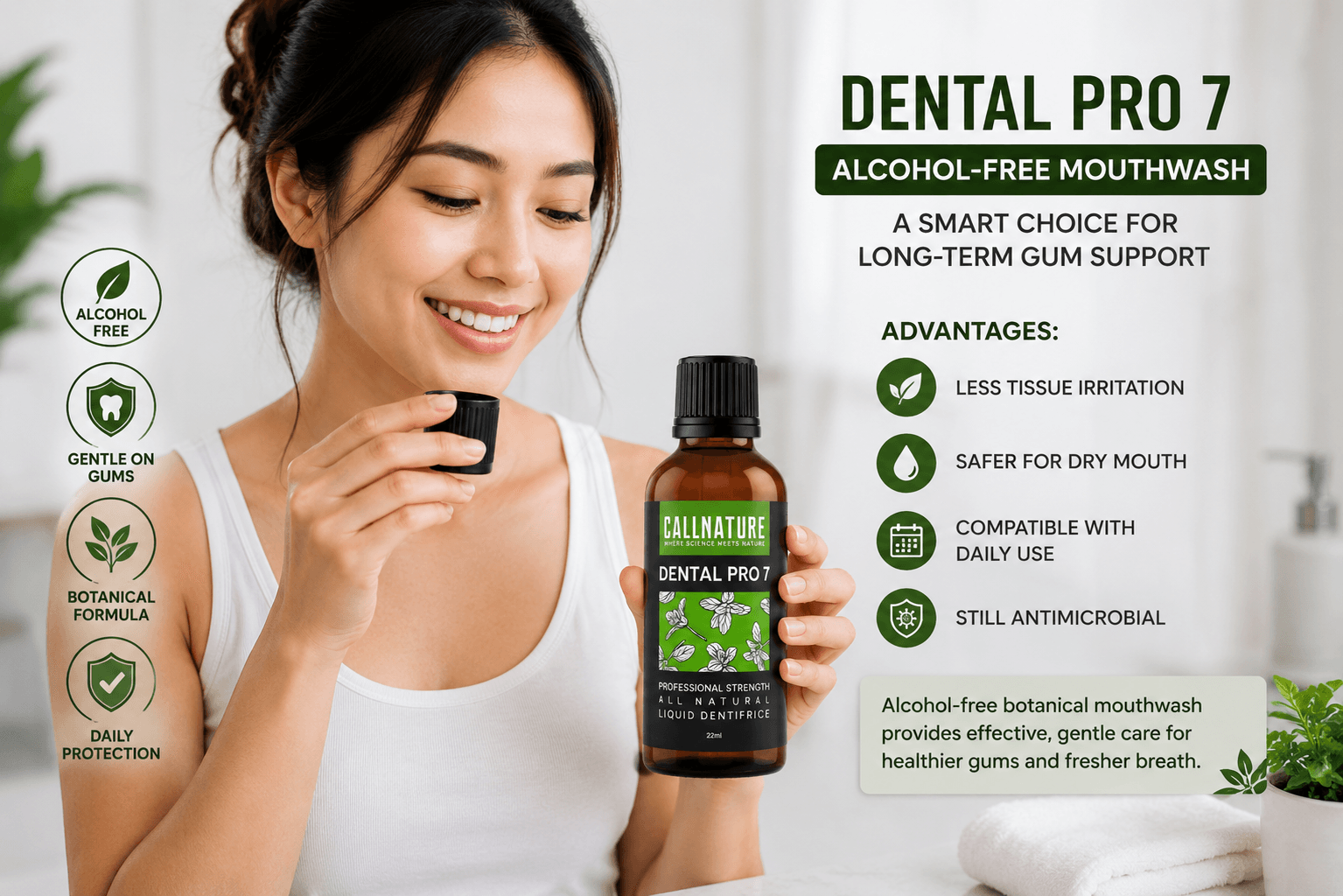
Professional dental organizations (.org) increasingly recommend alcohol-free mouthwash for long-term gum support.
Advantages:
- less tissue irritation
- safer for dry mouth
- compatible with daily use
- still antimicrobial
For many users, alcohol-free botanical mouthwash provides a practical baseline option.
Oil Based Gum Treatment vs Mouthwash — Gumline Targeting
Periodontal education (.edu dental programs) stresses that gum disease begins at the gingival margin — not the cheek or tongue.
Therefore, targeted approaches may offer advantages:
Targeted gum care methods:
- interdental brushes
- floss
- gumline brushing
- localized gel or oil application
Oil-based gum treatments align with this targeted philosophy.
Safety Considerations
Both methods must be used safely.
Mouthwash Safety
- follow label dilution
- avoid swallowing
- monitor sensitivity
- avoid excessive frequency
Oil-Based Treatment Safety
- use small amounts
- apply as directed
- avoid essential oil overconcentration
- discontinue if irritation occurs
Dental associations (.org) caution that “natural” does not automatically mean irritation-free.
Clinical Evidence — What Research Supports
Evidence strength differs.
Stronger Evidence Base
Supported by larger study bodies (.gov / .edu):
- mechanical plaque removal
- antiseptic mouthwash
- essential oil rinses
- chlorhexidine (prescription)
Emerging / Moderate Evidence
Smaller or growing research base:
- oil pulling
- botanical gum oils
- herbal concentrates
This does not mean ineffective — only that research volume differs.
When Mouthwash Is Better
Mouthwash may be preferable when:
- whole-mouth odor control needed
- quick routine required
- fluoride support desired
- post-meal rinse helpful
- user prefers swish method
It offers speed and convenience.
Many natural oral care routines include brushing, interdental cleaning, and optional gum concentrate support. Checkout Dental Pro 7 Here
When Oil Based Gum Treatment May Be Better
Oil-based gum treatment may be preferable when:
- gumline focus is priority
- longer contact desired
- botanical actives used
- alcohol sensitivity exists
- dry mouth present
It emphasizes targeted support.
Best Practice — Combined Strategy
Dental education sources (.edu) consistently recommend layered approaches rather than single-solution dependence.
Effective combined routine:
- brush gumline thoroughly
- clean between teeth
- tongue clean
- antimicrobial rinse
- targeted gum support (if desired)
Support + mechanics = better outcomes.
Oil Based Gum Treatment vs Mouthwash — Practical Verdict
Mouthwash advantages:
✔ fast
✔ broad coverage
✔ convenient
✔ widely studied
Oil-based treatment advantages:
✔ longer contact
✔ targeted gumline
✔ lipid delivery
✔ botanical compatibility
Best choice depends on:
- user preference
- gum sensitivity
- routine discipline
- product quality
- dental guidance
Neither replaces professional periodontal care.
Professional Care Still Required
According to ada.org and nidcr.nih.gov, see a dental professional if you notice:
- bleeding gums
- gum recession
- loose teeth
- persistent inflammation
- chronic bad taste
Supportive products cannot treat advanced periodontal disease.
Understanding Gum Pain and What It May Indicate
Gum discomfort is often one of the earliest warning signs that something in the oral environment requires attention. While temporary irritation may occur after aggressive brushing or minor food-related trauma, recurring soreness, tenderness, throbbing sensations, or pain along the gumline can sometimes be associated with plaque accumulation, gum inflammation, infection, gum recession, or other underlying oral health concerns.
Because gum pain can develop from multiple causes, focusing only on symptom relief may overlook the source of the problem. Supportive products such as mouthwash or oil-based gum treatments may help improve comfort as part of a broader oral care routine, but persistent discomfort should never be ignored. Readers interested in understanding common triggers, warning signs, and supportive approaches for managing discomfort can learn more in our guide to gum pain relief and causes explained.
Recognizing potential causes early may help support healthier gums and encourage timely professional evaluation when necessary.
FAQ – Oil Based Gum Treatment vs Mouthwash
Is oil based gum treatment the same as oil pulling?
No. Oil pulling involves swishing oil throughout the mouth, while oil-based gum treatments are typically applied directly along the gumline.
Can oil-based gum treatments replace mouthwash?
Not necessarily. Both approaches serve different purposes and are often used alongside brushing, flossing, and other oral hygiene practices.
Why do some oil-based products stay on the gums longer?
Oil-based formulas may adhere to oral tissues longer than water-based rinses, allowing extended contact with the gumline.
What ingredients are commonly found in oil-based gum treatments?
Many formulations contain botanical compounds such as clove, thyme, peppermint, myrrh, manuka, and other plant-derived ingredients associated with oral care support.
Where can I learn more about these ingredients?
Our Dental Pro 7 Ingredients Explained guide provides a detailed overview of the ingredients, their functions, and the science behind the formulation.
Gum Health Support Option — Dental Pro 7
If you are building a daily natural gum care routine, some people prefer adding an oil-based gum concentrate for longer contact time along the gumline — instead of quick rinse exposure.
Dental Pro 7 is a botanical gum concentrate designed to support gumline care using oil-based delivery and plant-derived compounds.
 Oil-based gum concentrate format
Targets gumline contact area
Botanical ingredient approach
No water dilution required
Easy to apply as part of daily routine
Many natural oral care routines include brushing, interdental cleaning, and optional gum concentrate support.
Checkout Dental Pro 7 Here
Dental Pro 7 Editorial Team
The Dental Pro 7 Editorial Team researches oral microbiome science, preventive dentistry, gum health, nutrition, and evidence-based oral wellness topics. Content is developed through the review of scientific literature, government health resources, and reputable dental publications to provide balanced educational information.
Dental Pro 7 Editorial Policy
All content published on Dental Pro 7 follows editorial standards focused on accuracy, transparency, source verification, and educational value. Articles are reviewed periodically to reflect current scientific understanding, oral health research, and product information when significant updates become available.
Last Updated Date
Last Updated: June 19, 2026
Related articles: