Natural Antibacterial Mouthwash Gum Care
Natural Antibacterial Mouthwash Gum: A natural antibacterial mouthwash for gum care is often chosen by people who want to support their oral health with plant-based or gentle formulations. Gum problems usually begin when bacterial plaque accumulates along the gumline, triggering inflammation, bleeding, and tenderness. Reducing harmful bacteria is one of the most important steps in preventing early gum disease progression.
According to the Centers for Disease Control and Prevention (cdc.gov) and the National Institute of Dental and Craniofacial Research (nidcr.nih.gov), plaque bacteria are the primary driver of gingivitis and periodontal disease. Mouthwash — including natural antibacterial mouthwash — is considered a supportive tool that works alongside brushing and flossing, not a replacement.
This guide explains how natural antibacterial mouthwash works, which ingredients are research-supported, how oil-based formulas differ, and how to choose safe and effective options for gum care.
Why Antibacterial Action Matters for Gums
University dental programs (.edu dental schools) teach that gum inflammation begins when bacterial biofilm produces toxins at the gum margin. These toxins irritate tissue and activate the immune response.
Key gum-protection goals:
- reduce harmful bacteria
- disrupt plaque biofilm
- support gum tissue comfort
- lower inflammatory triggers
Professional dental organizations (.org) consistently emphasize that mechanical plaque removal comes first, while antibacterial rinses provide added support.
Natural Antibacterial Mouthwash for Gum Care — How It Works
Natural antibacterial mouthwash relies on botanical and mineral compounds instead of synthetic antiseptics.
Common mechanisms include:
- plant antimicrobial compounds
- essential oil membrane disruption
- pH balancing
- antioxidant effects
- biofilm interference
Many plant-derived antimicrobials are documented in laboratory and clinical research indexed in ncbi.nlm.nih.gov.
Essential Oil Antibacterial Mouthwash Ingredients
Essential oils are among the most studied natural antibacterial agents in oral care research.
Frequently studied oils include:
- thymol (thyme derived)
- eucalyptol
- menthol
- clove oil (eugenol)
- tea tree oil
Research literature indexed in government databases (.gov via PubMed) shows these compounds can inhibit growth of several oral bacteria associated with plaque and gingivitis.
Important safety rules:
- must be diluted
- avoid swallowing
- avoid full-strength use
- discontinue if irritation occurs
Most commercial natural mouthwashes use controlled dilution blends.
Herbal Extract Antibacterial Rinses
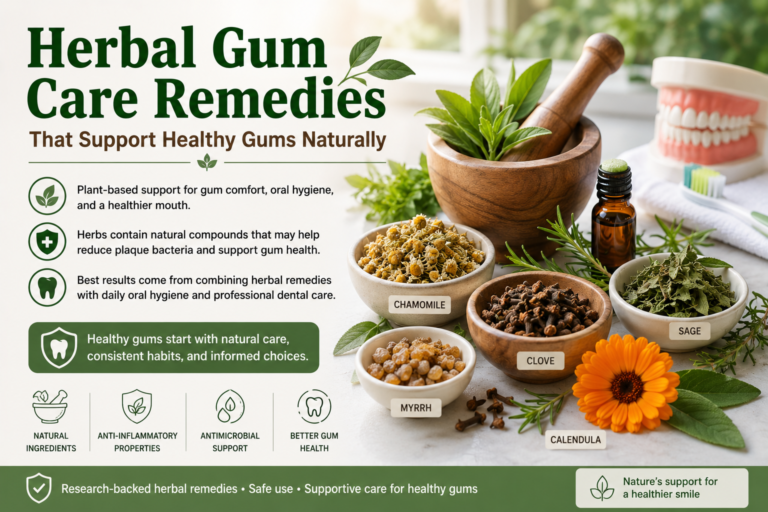
Herbal medicine references from nonprofit and academic sources (.org and .edu) document antimicrobial activity in several traditional oral herbs.
Common herbal antibacterial extracts:
- sage
- myrrh
- chamomile
- calendula
- neem
Potential benefits:
- antimicrobial support
- anti-inflammatory effects
- tissue soothing
Alcohol-free herbal mouthwashes are generally preferred for gum comfort.
Natural Antibacterial Mouthwash for Gum Care — Salt and Mineral Rinses
Dental clinics and universities (.edu) frequently recommend salt water rinses after dental treatment because of their supportive antibacterial environment.
Benefits:
- reduces swelling
- supports cleaner oral conditions
- low irritation risk
- inexpensive
Method:
- ½ teaspoon salt
- warm water
- rinse 30–45 seconds
- repeat daily
While simple, salt rinses remain clinically respected supportive care.
Xylitol-Enhanced Natural Mouthwash
Xylitol is a naturally occurring sugar alcohol widely studied in dental caries research (.gov and .edu publications).
Observed oral benefits:
- reduces harmful bacterial adhesion
- lowers acid production
- supports oral ecology balance
Natural mouthwashes sometimes include xylitol for additional antibacterial support.
Alcohol-Free vs Alcohol-Based Antibacterial Mouthwash
Dental education sources (.edu) warn that alcohol-based mouthwash may:
- dry oral tissues
- worsen dry mouth
- irritate sensitive gums
Dry mouth increases bacterial risk.
Most natural antibacterial mouthwash products are alcohol-free, making them more suitable for long-term gum care support.
Oil-Based Antibacterial Gum Care vs Water-Based Mouthwash
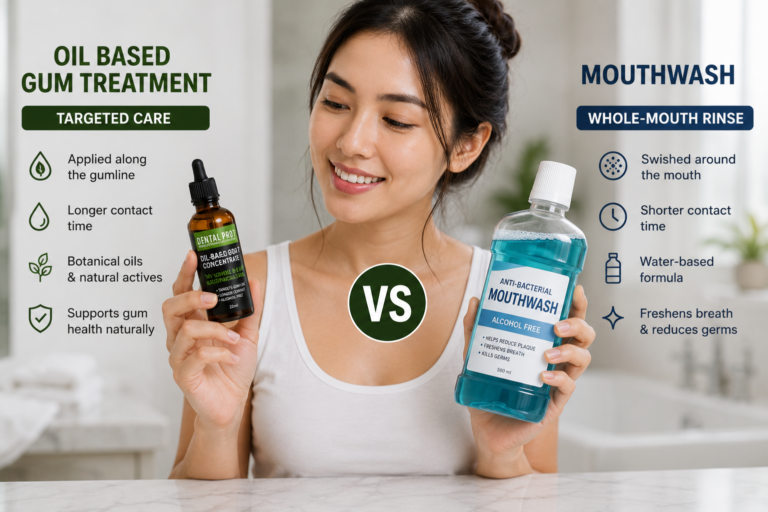
Most mouthwashes are water-based and used briefly. Another category uses oil-based antibacterial gum care concentrates designed for direct gumline application.
Supporters suggest oil-based antibacterial delivery may:
- increase contact time
- resist dilution
- improve botanical compound delivery
- support moisture balance
Educational product materials at dentalpro7.com describe oil-based gum concentrates formulated with antibacterial botanical ingredients for targeted gumline support. These products are positioned as adjunctive care tools rather than treatments.
Oil Pulling as Antibacterial Support
Oil pulling has been evaluated in small clinical trials listed in ncbi.nlm.nih.gov. Some studies show reductions in plaque and oral bacterial counts.
Common oils used:
- coconut oil
- sesame oil
- sunflower oil
Possible antibacterial mechanisms:
- lipid membrane interaction
- mechanical removal
- toxin dilution
Oil pulling supports hygiene but does not replace brushing or flossing. Herbal support for gum care
Healthy gums depend heavily on consistent plaque removal and balanced oral hygiene habits. Readers interested in supporting healthier gums may also want to understand the relationship between gum inflammation and plaque buildup. Supporting healthier gums
Natural Antibacterial Mouthwash for Gum Care — Proper Use
Dental hygiene programs (.edu) emphasize correct rinse habits for effectiveness.
Best practice:
- brush and floss first
- rinse afterward
- swish at least 30 seconds
- avoid eating immediately
- use consistently daily
Frequency matters more than strength.
What Natural Antibacterial Mouthwash Cannot Do
According to ada.org and nidcr.nih.gov, no mouthwash — natural or synthetic — can:
- remove tartar
- cure periodontal disease
- reverse bone loss
- replace deep cleaning
- treat advanced infection
Mouthwash is supportive only.
Warning Signs That Need Dental Care
Public health dental authorities (.gov and .org) recommend professional evaluation if you notice:
- persistent bleeding
- swelling
- gum recession
- loose teeth
- pain
- pus
- chronic bad taste
Do not rely on antibacterial rinses alone when symptoms persist.
Choosing a Natural Antibacterial Mouthwash — Checklist
Look for:
✅ alcohol-free formula
✅ botanical antimicrobial ingredients
✅ dilution safety
✅ ingredient transparency
✅ realistic claims
✅ reputable manufacturer
✅ supportive (not curative) positioning
Avoid “instant cure” marketing claims.
Natural Antibacterial Mouthwash for Gum Care — Practical Summary
Most effective supportive antibacterial approach:
✔ gumline brushing
✔ daily interdental cleaning
✔ essential oil rinses
✔ herbal mouthwash
✔ salt water rinses
✔ xylitol support
✔ oil pulling
✔ oil-based gum concentrates
Layered habits produce stronger gum outcomes.
✅ FAQ Schema Content
Q: Does natural antibacterial mouthwash work?
A: It can help reduce bacteria and support gum health when used with brushing and flossing.
Q: Are essential oils antibacterial for gums?
A: Yes, several essential oils show antibacterial activity in oral research studies.
Q: Is alcohol-free mouthwash better for gum care?
A: Often yes, because it reduces dryness and irritation risk.
 Gum Health Support Option — Dental Pro 7
 Gum Health Support Option — Dental Pro 7
If you are building a daily natural gum care routine, some people prefer adding an oil-based gum concentrate for longer contact time along the gumline — instead of quick rinse exposure.
Dental Pro 7 is a botanical gum concentrate designed to support gumline care using oil-based delivery and plant-derived compounds.
 Oil-based gum concentrate format
Targets gumline contact area
Botanical ingredient approach
No water dilution required
Easy to apply as part of daily routine
Many natural oral care routines include brushing, interdental cleaning, and optional gum concentrate support.
Checkout Dental Pro 7 Here