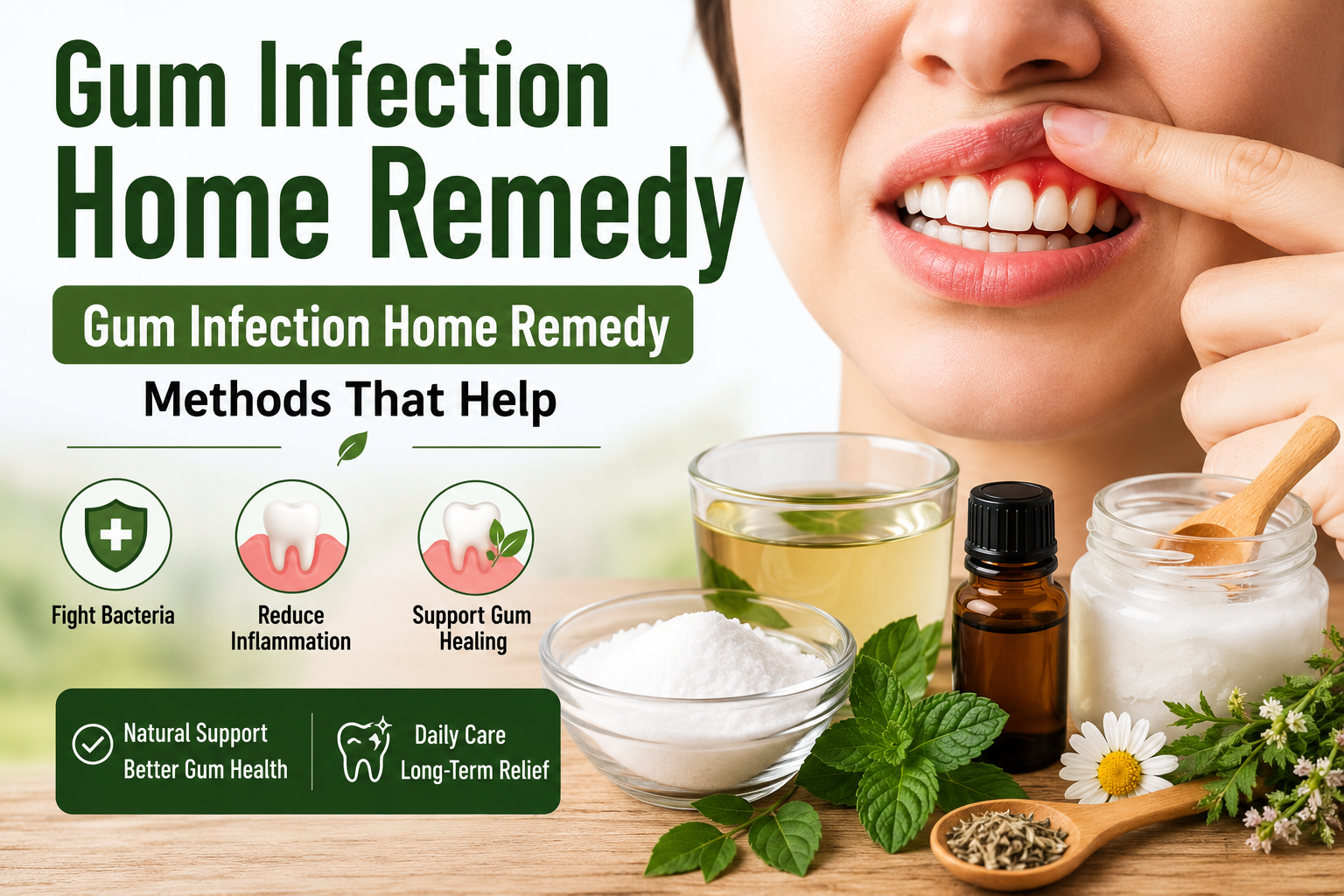
Gum Infection Home Remedy Gum Infection Home Remedy Methods That Help
Gum Infection Home Remedy Gum Infection Home Remedy Methods That Help
Gum Infection Home Remedy: August 1, 2026. ⏱️ Min Read: 10 min read
A gum infection can begin quietly — with mild redness, swelling, or bleeding — and progress into serious periodontal disease if ignored. Many people look for gum infection home remedy options to reduce discomfort and support healing naturally. While home remedies can help manage early symptoms and support gum health, dental authorities emphasize that they should complement — not replace — professional care.
According to the National Institute of Dental and Craniofacial Research (nidcr.nih.gov) and the Centers for Disease Control and Prevention (cdc.gov), gum infections are primarily caused by bacterial plaque and tartar buildup along the gumline. Effective home care focuses on reducing bacteria, lowering inflammation, and improving daily plaque removal.
This guide explains which gum infection home remedy methods are evidence-aligned, how they work, and when to seek professional treatment.
What Is a Gum Infection?
Dental education programs (.edu dental schools) define a gum infection as a bacterial-driven inflammatory condition affecting gum tissue and sometimes deeper supporting structures.
Early stage: gingivitis, redness, bleeding, tenderness
Advanced stage: periodontitis, pocket formation, tissue breakdown, bone loss
Home remedies are most effective in early-stage gum inflammation, not advanced disease.
Although gum infections often begin with mild inflammation, understanding the progression of gum infections and gingivitis helps readers recognize symptoms before periodontal damage becomes more severe.
Understanding Early Gingivitis Before Infection Progresses
Many people do not realize that gum infections often begin as gingivitis, a mild form of gum inflammation that can develop gradually over time. Early signs may include redness, tenderness, swelling, or bleeding during brushing and flossing. Because symptoms are often painless in the beginning, gingivitis can be overlooked until more noticeable gum problems develop. Addressing inflammation early is important because improving daily plaque control and gum care habits may help support healthier gums before deeper periodontal complications occur. Readers interested in learning more about early-stage gum inflammation and available care strategies can explore gingivitis treatment for healthier gums for additional information on maintaining long-term gum health.
Looking for Extra Daily Gum Support?
Brushing and flossing remain essential, but many people also choose botanical oral care products to help maintain healthier gums and a balanced oral microbiome.
Read the Complete Dental Pro 7 Review →
Primary Causes of Gum Infection
Public health and dental organizations (.gov and .org) consistently identify plaque biofilm as the primary cause.
Plaque contains: bacteria, toxins, inflammatory triggers
If not removed: hardens into tartar, traps more bacteria, increases infection risk
Therefore, the first and most important home remedy is mechanical plaque removal.
Daily Plaque Control: The Foundation of Every Gum Infection Home Remedy
The American Dental Association (ada.org) emphasizes brushing and interdental cleaning as the foundation of gum infection control.
Correct brushing focus:
- soft brush
- angle toward gumline
- gentle circular motion
- two minutes
- twice daily
Interdental cleaning:
- floss
- interdental brush
- water flosser
Without these steps, other remedies have limited effect.
Salt Water Rinse — First-Line Home Support
University dental clinics (.edu) frequently recommend salt water rinses after procedures due to their supportive healing properties.
Benefits: reduces swelling, supports tissue repair, lowers bacterial activity. inexpensive and safe
Method: ½ teaspoon salt, warm water, rinse 30–45 seconds, repeat 2–3 times daily
This is one of the most reliable gum infection home remedy methods.
Hydrogen Peroxide Diluted Rinse
Dental hygiene education (.edu) sometimes references diluted hydrogen peroxide as a short-term antimicrobial rinse.
Potential benefits: oxygen release effect, bacterial reduction, debris loosening
Safe use: dilute 1:1 with water, rinse briefly, do not swallow, use short term only
Avoid prolonged daily use unless advised by a dental professional.
Because bacterial imbalance may also contribute to persistent odor, readers can explore how Dental Pro 7 for Bad Breath supports fresher breath alongside daily oral hygiene.
Essential Oils That May Support Gum Health Naturally
Multiple oral microbiology studies indexed at ncbi.nlm.nih.gov show antimicrobial effects from certain essential oils.
Most researched oils: clove, thyme, tea tree, peppermint, eucalyptus
Possible benefits: bacterial membrane disruption, biofilm interference, inflammation modulation
ADA-recognized essential oil rinses (ada.org) are based on similar compounds. Always dilute properly before oral use.
Readers interested in comparing individual plant extracts can also review the Best Essential Oils for Gum Health Support guide for detailed ingredient information.
Oil Pulling as a Gum Infection Home Remedy
Clinical trials indexed in government research databases (.gov via PubMed) suggest oil pulling may reduce plaque and gingival index scores.
Method:
- coconut or sesame oil
- swish 5–10 minutes
- spit out
- rinse
- brush
Possible mechanisms:
- mechanical debris removal
- lipid interaction with bacteria
- biofilm disturbance
Supportive — not curative.
Oil-Based Gum Concentrate Approach
A newer supportive method is applying oil-based gum concentrates directly to the gumline instead of rinsing briefly.
Supporters suggest oil-based concentrates may: increase gum contact time, resist saliva wash-off, deliver botanical compounds locally
Educational product materials at dentalpro7.com describe oil-based gum concentrate approaches designed for targeted gumline support rather than quick rinse formats. These are presented as adjunct gum-care tools.
Anyone comparing botanical oral care products may also appreciate this Dental Pro 7 Comprehensive Review, which summarizes ingredients, supporting evidence, expected benefits, and practical considerations.
Baking Soda for Infection Environment Control
Dental education sources (.edu hygiene programs) note baking soda helps neutralize acids and shift oral pH.
Benefits:
- acid neutralization
- mild antibacterial effect
- odor reduction
Use:
- small amount mixed with water
- gentle brushing occasionally
- not daily long-term abrasive use
Herbal Rinses for Gum Infection Support
Integrative dentistry references (.org) and university herbal programs (.edu) describe antimicrobial herbs used traditionally for oral care.
Common options: sage, myrrh, chamomile, calendula
Preparation: brew strong tea, cool completely, rinse, discard, make fresh daily
Avoid alcohol-heavy extracts on inflamed gums.
Xylitol Bacterial Suppression
Xylitol is well supported in dental research (.edu and .gov indexed studies).
Research shows xylitol may: reduce harmful bacterial adhesion, lower acid production, support saliva flow
Use: xylitol gum after meals, xylitol mints
Look for products where xylitol is the primary sweetener.
Nutrition That Supports Healthier Gum Recovery
Public health nutrition guidance (.gov) and university nutrition departments (.edu) highlight diet’s role in gum health.
Important nutrients:
Vitamin C: collagen support, tissue repair
Vitamin D: immune regulation
Omega-3 fats: anti-inflammatory support
Helpful foods:
- citrus
- berries
- leafy greens
- fish
- nuts
- seeds
Reduce sugar frequency to limit bacterial fuel.
Many natural oral care routines include brushing, interdental cleaning, and optional gum concentrate support.: Checkout Dental Pro 7 Here
Hydration and Saliva: Your Mouth’s Natural Defense
Dental education (.edu) emphasizes saliva as a natural antimicrobial defense.
Saliva helps:
- wash bacteria
- neutralize acids
- supply immune proteins
- protect tissues
Support saliva:
- drink water frequently
- chew xylitol gum
- avoid tobacco
- manage dry mouth
Limitations of Home Remedies for Gum Infection
According to nidcr.nih.gov and cdc.gov, home remedies cannot:
- remove tartar
- treat periodontitis
- close deep gum pockets
- reverse bone loss
- replace scaling and root planing
Persistent infection requires dental treatment.
Before trying any concentrated botanical oral care product, reviewing this Dental Pro 7 Side Effects Review can help users understand proper use and safety considerations.
When to See a Dentist Immediately
Seek care if you notice:
- swelling with pain
- pus discharge
- loose teeth
- fever
- facial swelling
- bad taste
- severe bleeding
These may indicate spreading infection.
14-Day Gum Infection Home Remedy Plan
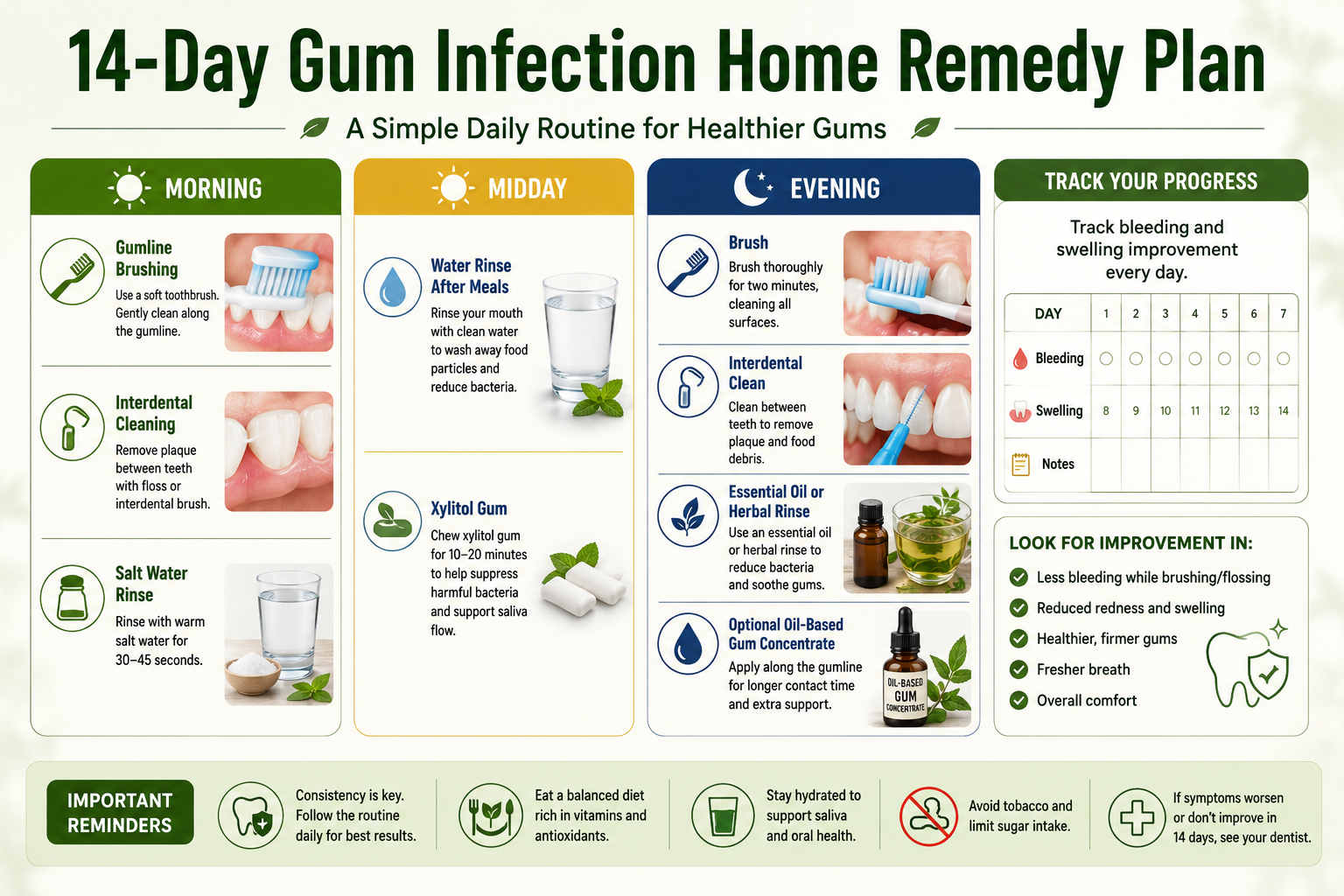
Morning: gumline brushing, interdental cleaning, salt rinse
Midday: water rinse after meals, xylitol gum
Evening: brush, interdental clean, essential oil or herbal rinse, optional oil-based gum concentrate
Track bleeding and swelling improvement.
FAQ – Gum Infection Home Remedy: Common Questions Answered
Can a gum infection heal with home remedies alone?
Home remedies may help reduce inflammation during the early stages of gum irritation, particularly when combined with thorough brushing, flossing, and plaque control. However, established gum infections or periodontitis usually require professional dental treatment because home care cannot remove tartar or treat deep periodontal pockets.
Is salt water good for a gum infection?
Yes. A warm salt water rinse may help soothe irritated gums, reduce minor swelling, and temporarily lower bacterial activity. Although it can support healing, it should be used alongside regular oral hygiene and should not replace professional dental care when symptoms persist.
How long should I try home treatment before seeing a dentist?
If your symptoms—including bleeding, swelling, tenderness, or bad breath—do not improve within one to two weeks, schedule a dental examination. Seek immediate professional care if you notice severe pain, pus, facial swelling, fever, or loose teeth.
Can essential oils help support gum health?
Certain essential oils, such as clove, tea tree, peppermint, and thyme, have demonstrated antimicrobial properties in laboratory studies. When properly diluted, they may complement daily oral hygiene, but they are not a substitute for brushing, flossing, or professional treatment.
What is the best daily routine for supporting healthy gums?
A healthy gum care routine includes brushing twice daily with a soft-bristled toothbrush, cleaning between the teeth every day, rinsing when appropriate, staying hydrated, eating a balanced diet, and scheduling regular dental checkups. Some people also include botanical oral care products as part of their daily routine.
 Why Some People Add Dental Pro 7 to Their Daily Gum Care Routine
 Why Some People Add Dental Pro 7 to Their Daily Gum Care Routine
If you are building a daily natural gum care routine, some people prefer adding an oil-based gum concentrate for longer contact time along the gumline — instead of quick rinse exposure.
Dental Pro 7 is a botanical gum concentrate designed to support gumline care using oil-based delivery and plant-derived compounds.
 Oil-based gum concentrate format
Targets gumline contact area
Botanical ingredient approach
No water dilution required
Easy to apply as part of daily routine
Many natural oral care routines include brushing, interdental cleaning, and optional gum concentrate support.